Juan Laguna Jr., the eldest son of two Mexican immigrants in central Nebraska, had never been to a political event until two Sundays ago. That’s when he found himself, at age 20, in a large hall in his small town, listening to an independent named Dan Osborn make a pitch for the Senate.
His family had just experienced a shock: The giant Tyson beef processing plant in the middle of Lexington, Neb., closed suddenly at the end of January, ripping the heart out of the town’s economy and wiping out around 3,200 jobs, including those of his parents — about a third of the population of the town.
Mr. Laguna didn’t vote in 2024, the first year he was eligible. But when Mr. Osborn, a mechanic and former union leader, came to town, he agreed to join his oldest sister, his parents and their next door neighbor, to go listen. He wasn’t sure if it would help, but it couldn’t hurt, and he was desperate.
Lexington is an unlikely place for Mr. Osborn to visit: It’s in a House district that President Trump won by 50 percentage points. The town itself is mostly Hispanic, a demographic shift that started in the early 1990s when workers, largely from Mexico, came to work in the meat plant.
Mr. Osborn wouldn’t need to win the district to capture the Senate seat. He does, however, need to stem his losses in the reddest parts of the state by persuading enough people like the Lagunas to turn out and vote for him, while he runs up his margins in the blue cities of Omaha and Lincoln. That just might give him a shot at beating the Republican incumbent, Senator Pete Ricketts, a son of the founder of TD Ameritrade, an online brokerage.
Mr. Osborn’s pitch, “Replace a Billionaire with a Mechanic,” sounds decidedly Democratic. But he is running as an independent, part of a line of left-leaning candidates in Idaho, Montana, and South Dakota, who are trying to side step a Democratic brand that is toxic in much of the nation’s midsection.
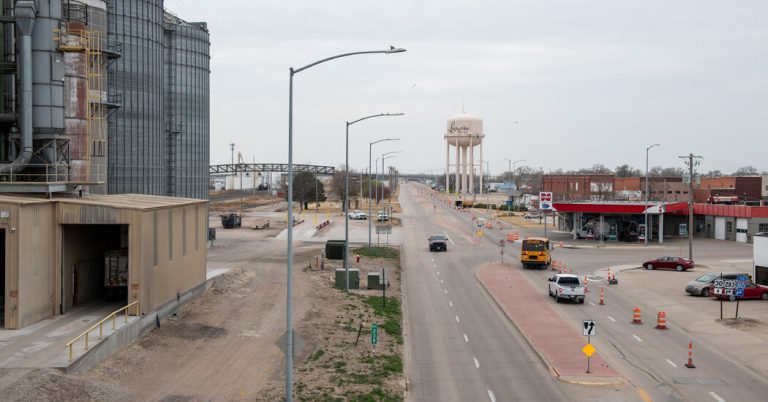
The event was held next to the town’s giant grain elevator complex, a series of soaring silos visible from almost anywhere in Lexington. The Lagunas got there early and sat in the back as volunteers in red T-shirts took names and gave out campaign buttons, bottles of water and salty snacks.
“This isn’t left and right anymore, this is big versus little,” said Mr. Osborn, his brown shirt embroidered with his name. “We have to look at the people who spend billions of dollars in our elections trying to keep the people that they want in power.”
Mr. Laguna, a maintenance worker at a pharmaceutical plant, had never been interested in politics. It felt far away from his life, and seemed to be more about team colors than solving people’s problems. People he knew complained that politicians talked a lot but didn’t do much, and that seemed right to him.
In 2024, he had just become eligible to vote, but he was not particularly pulled toward either candidate. Donald Trump was funny on TikTok, he said, and he liked the former president’s pitch on the economy.
But he did not like how Mr. Trump talked about immigrants. Friends and family urged him to vote, he said, including his sister, who at the time was 16 and wasn’t old enough yet.
“I felt really pressured to be honest,” he said, sitting with his family at his parents’ kitchen table last month. “I did not know who to vote for. And I just decided not to vote at the end of the day.”
But in the year since came Mr. Trump’s deportations. The immigration raids seem to be aimed at people like his parents, Mr. Laguna said, and his parents have invested more in America than almost anyone he knew.
They grew up poor in Mexico. His father, Juan Laguna Sr., moved to the United States when he was 13, to pick tomatoes in California. He found his way to Nebraska, first to a turkey processing plant, where he was so young his colleagues called him “the baby,” then to the meat plant in Lexington.
Work in the plant was hard. He wielded knives to scrape off fat and cleavers to wrench bones from sockets. The plant had the capacity to butcher 5,000 cattle a day, and many of its warehouselike rooms were so cold that they numbed his fingers and feet.
But Mr. Laguna Sr. said that the plant was a relief from work in the fields. He no longer had to migrate with the seasons and was able to settle down and have a family. He married Alejandra Gutierrez Alvarado, whose family lived near his in rural Mexico. She got a job at the Lexington meat plant too.
The plant eventually brought the Lagunas their American dream: a shiny black Chevrolet High Country truck and a three-bedroom house, which they bought 18 years ago for around $95,000. Ms. Gutierrez Alvarado said success for her was traveling to Mexico in the summers and taking her mother on vacations.
But their Nebraska-born children were their biggest point of pride, they said. They were getting an education, something neither of them had done. The Lagunas said they live and work in the U.S. legally, but are not citizens.
Mr. Laguna’s parents were on a college tour with his middle sister, Kimberly Laguna, when they got the news the plant would close. They kept walking, Kimberly said, but all three of them had stopped hearing what the guide was saying. She said her first thought was that she would not be able to go to college. On the drive back, her father started feeling dizzy and having shortness of breath and numbness in one of his arms. He pulled over, and they debated whether to take him to a hospital. Eventually Kimberly drove them home.
Mr. Laguna got the news about the plant closure in a text message from his aunt as he drove home from work.
“That was one of the worst drives I’ve ever had in my life,” he said. “I was just in shock.”
His parents are both 42 with little English. Their house will be hard to sell, and their youngest child is still in middle school.
And Lexington is still reeling. Around 11 a.m. on a recent Monday, the brightly painted green interior of the Princess Bakery had just one customer, 62-year-old Manuel Cruz.
“Tyson closes, Lexington dies, you know?” he said, holding a Styrofoam cup of coffee.
The plant’s massive white structure towers above dozens of little businesses that popped up as it grew: Jimmy Johns, Roos Taqueria, Rosario Foods. Its big parking lot is mostly empty, and the maze of cattle pens near the railroad tracks where ranchers sell their livestock are mostly empty too.
“It feels like it’s over,” Mr. Laguna Jr. said, “like Lexington is over.”
His parents are trying to decide what to do. Tyson is offering his father a job at a meat plant in Kansas for half what he made in Lexington, and his mother got an offer at a plant in Iowa, also for about half the money. Two of their neighbors have already packed up their families and moved away, leaving empty homes they cannot rent.
Mr. Laguna said the experience had activated his political taste buds. Politics is more than just people arguing, he said. It can help determine the course of people’s lives. That is why he went to see Mr. Osborn. He said he liked how Mr. Osborn seemed to care for working people.
That was an impression the candidate clearly wanted to leave when he told the Lexington gathering, “I want to represent the bus drivers, the truckers, the carpenter. That is what this campaign is for. It’s for these people, the people that wake up every day with sore joints.”
Mr. Laguna said he’d made up his mind. “Me and my sister, we want to vote in November. We want Nebraska to be a better place.”