For sportsmen and target shooters, what is the biggest bullet available? As the number one firearms auction house in the industry, Rock Island Auction Company is well-equipped to compare some of the rarest heavy-hitters ever designed and the rifles that chamber these mammoth rounds.
If you’re looking for history’s most impressive large caliber rifles, Rock Island Auction Company’s February 21-23 Sporting & Collector Auction in Bedford, Texas features some true titans in arms development. Click on the images throughout this article to learn more about each model.
Road to the Biggest Bullet
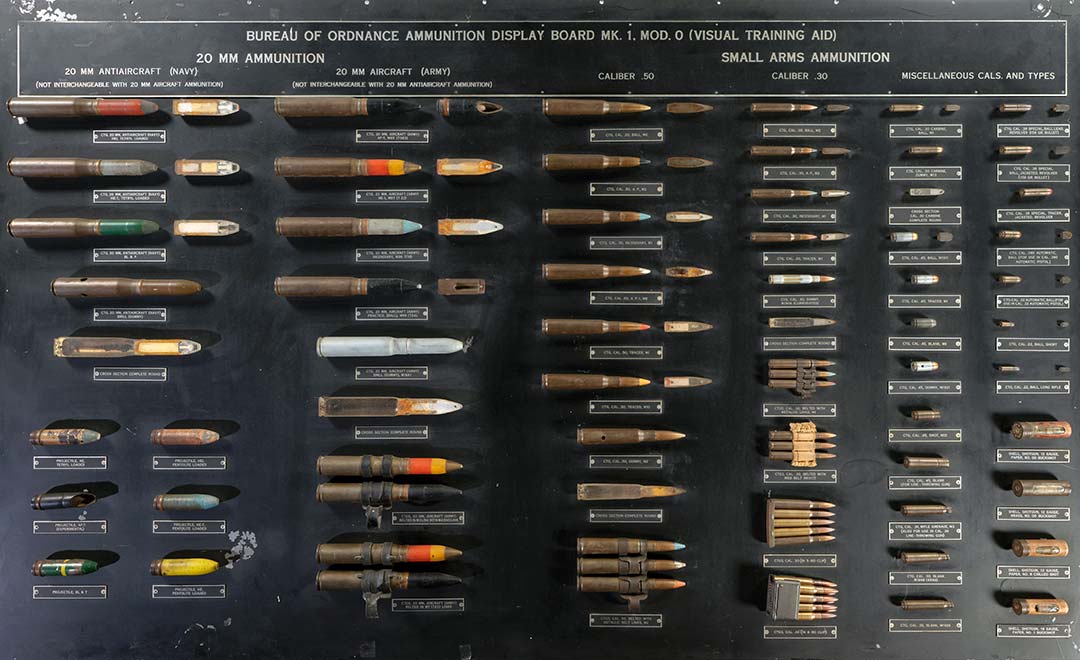
In the hunting world, the biggest bullet designs evolved from the need to effectively take on some truly mammoth game. In the black powder era, African hunters commissioned massive rifles like the London-made 2 bore example pictured below. Sir Samuel Baker wrote about a similar rifle nicknamed “Baby” that fired a “half-pound shell.”
When describing the effect of this monstrous round against an elephant, Baker wrote that his shell “had entered the flank on the right side, breaking the rib upon which it had exploded; it had then passed through the stomach and the lower portion of the lungs, both of which were terribly shattered; and breaking one of the fore-ribs on the left side, it had lodged beneath the skin of the shoulder. This was irresistible work, and the elephant had evidently dropped in a few minutes after having received the shell.”
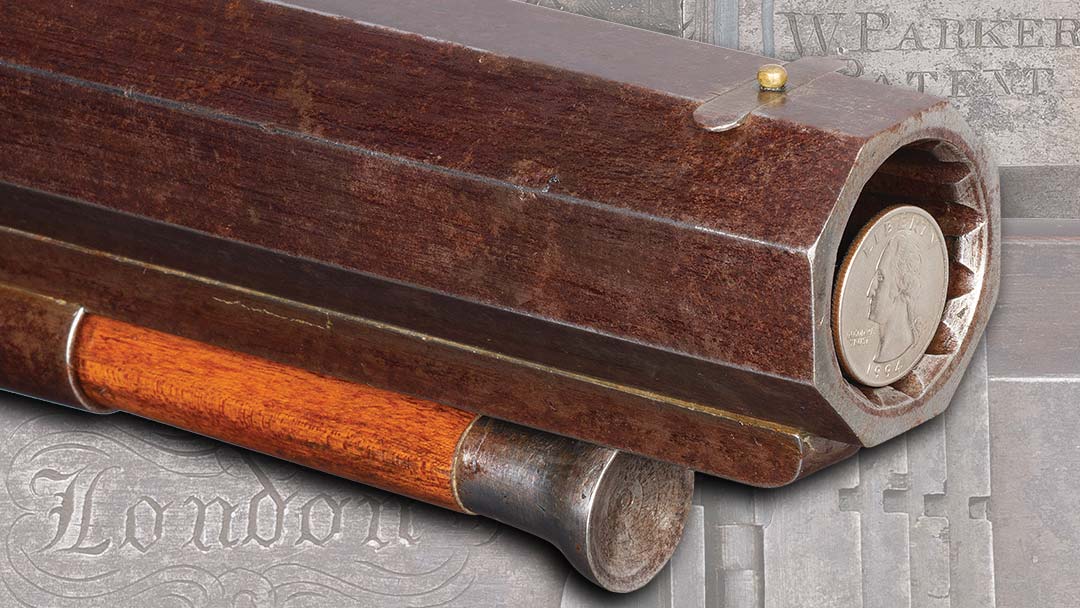
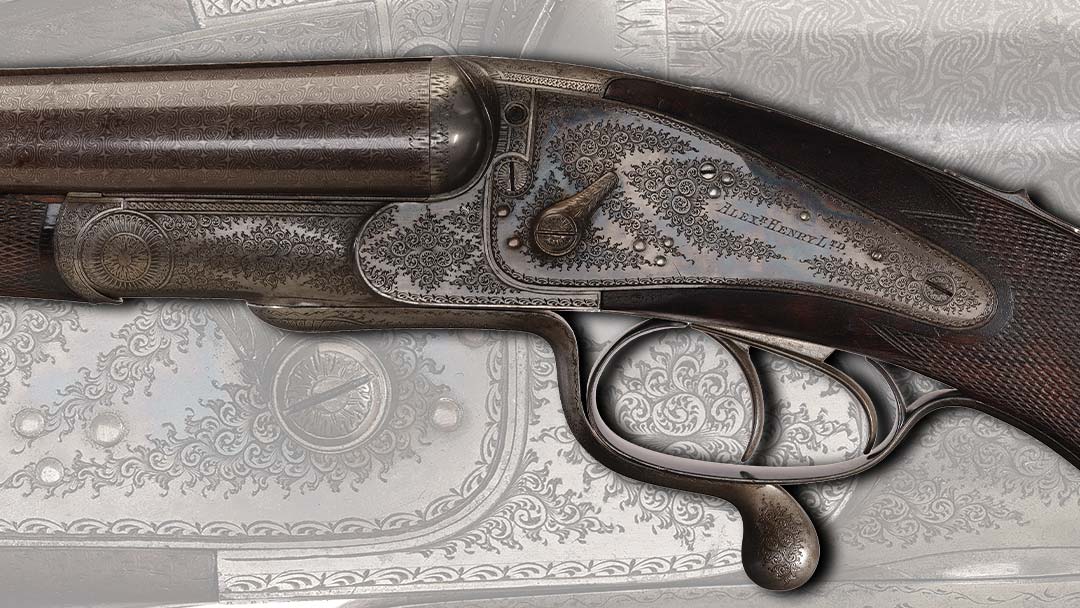
The biggest bullet options in the early decades of centerfire cartridges included the .450 Black Powder Express. Scottish gun designer Alexander Henry developed the round for military trials, but a higher velocity version of the bullet proved ideal for sporting purposes. The Black Powder Express family was well suited to the break open, breech loading double rifles that had quickly become a staple of European big game hunting.
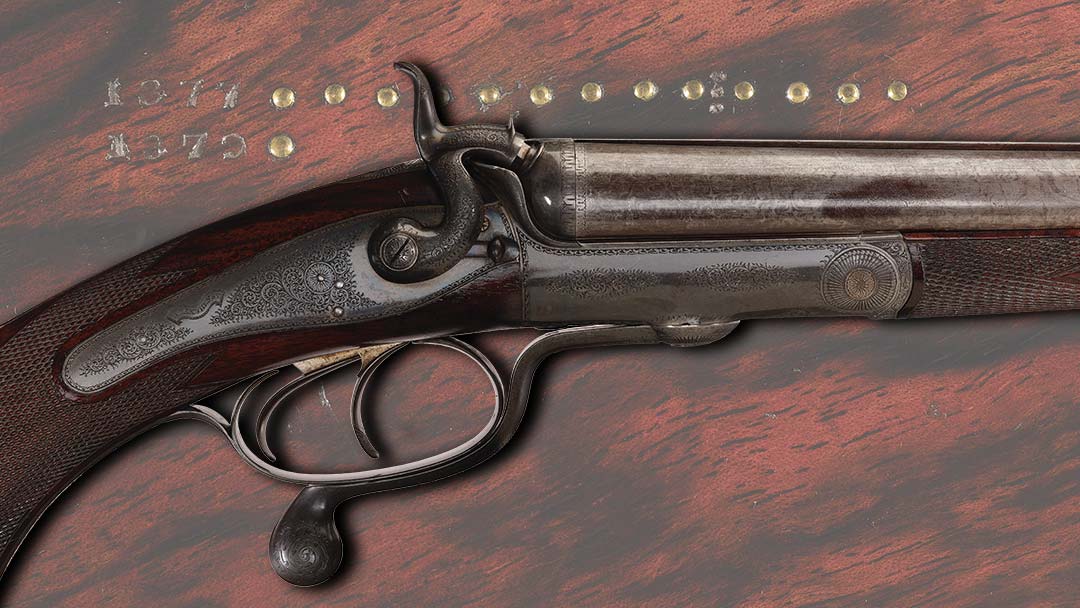
Alexander Henry continued to offer more innovative gun designs and firearms capable of handling progressively stronger chamberings like .577 Black Powder Express. Perhaps the biggest bullet of its era that saw widespread use, the .577 Black Powder Express became the go-to round taking on lions and tigers and was fielded by some of the most legendary names in hunting like John “Pondoro” Taylor, Arthur Henry Neumann, and the previously mentioned Samuel Baker. The Black Powder Express family would set the stage for their more powerful smokeless successors, the mighty Nitro Express.
Biggest Bullet Bolt Actions
The bolt action magazine rifle offered a more affordable option for African big game hunters compared to its more costly double rifle counterpart, and a variety of hefty rounds were introduced for the platform in the early 1900s. Large calibers like .404 Jeffery .425 Westley Richards, and .416 Rigby laid the groundwork for modern titans like the .450 Rigby, the biggest bullet designed by John Rigby & Co. for bolt action rifles. The 480-grain Hornady Dangerous Game .450 Rigby, for instance, reaches 2,400 fps and delivers an impressive 6,138 foot-pounds of muzzle energy.
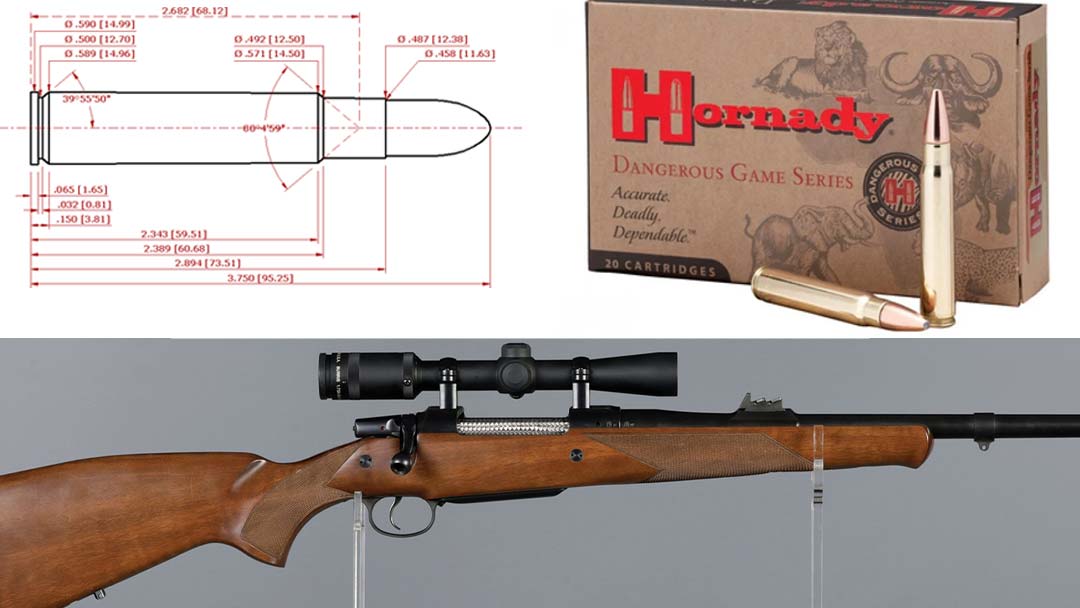
Sturdy actions are required to chamber these powerful rounds, like the CZ Model 550 rifles pictured above and below. The latter example is a true rarity chambered in .550 Magnum, an imposing cartridge that uses a 700 grain bullet at 2,240 fps, producing 7,800 foot-pounds of muzzle energy. As a poster on the African Hunting forums rightly observed, that much power would “put a T-Rex on the ground.”
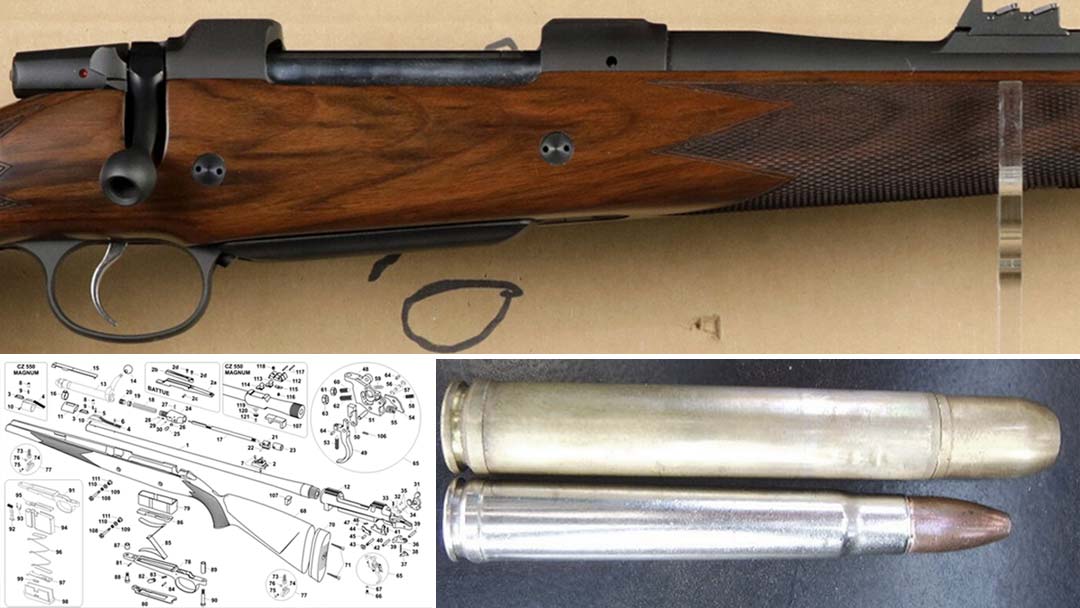
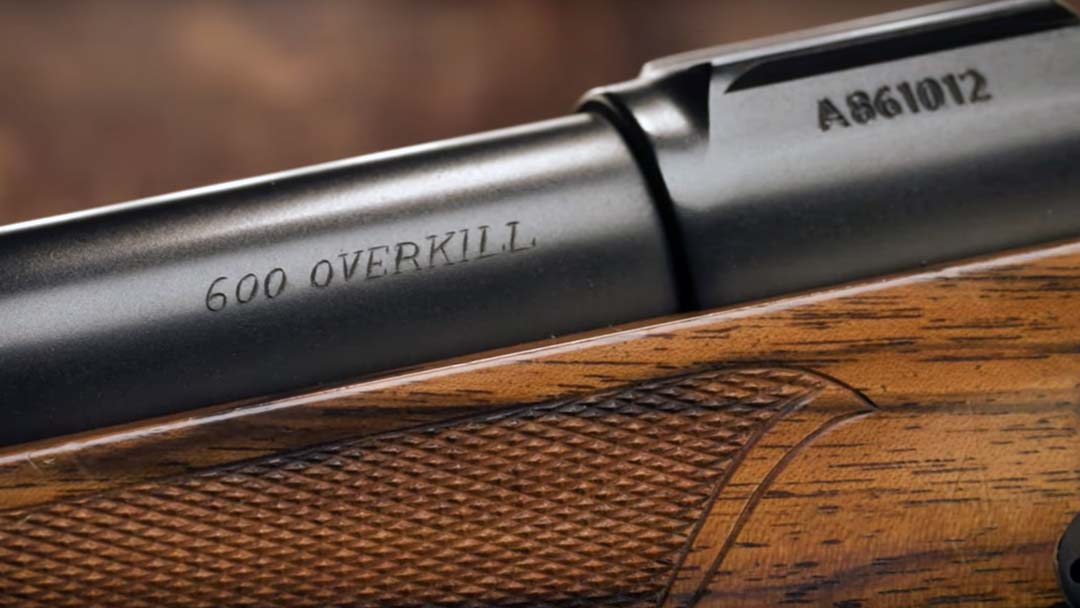
Speaking of dinosaur hunting, our next large caliber rifle is one of the most impressive stoppers in the world. Pictured below, this American Hunting Rifle by Wayne Jacobson was designed to offer a rifle chambered in the biggest bullet the CZ 550 action could manage. .600 Overkill more than lives up to the hype. Capable of propelling a 1,000 grain bullet to velocities over 2,400 fps, .600 Overkill can reach a shoulder-numbing 13,000 foot-pounds of muzzle energy.
Biggest Bullet Double Rifles
When it comes to large caliber rifles in the sporting pursuit, the double rifle platform resigns supreme. Designed for hunting Africa’s “Big Five,” the biggest double rifles pack enough punch to take down an angry Cape buffalo or a charging elephant. When loaded with a 750 grain bullet, a 3 inch round of .577 Nitro Express can reach 2,050 fps and deliver 7,020 foot-pounds of muzzle energy.
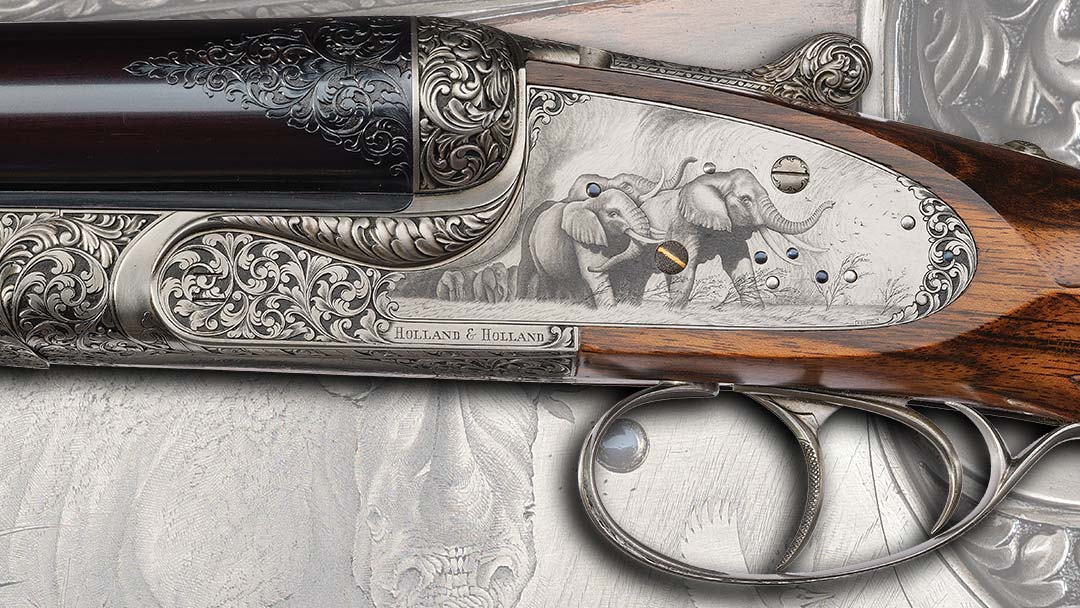
The .600 Nitro Express, a slower but heavier round, steps up the power to nearly 8,000 foot-pounds of muzzle energy. The biggest bullet in the Nitro Express family, the .700 NE, delivers a whopping 9,050 foot-pounds. Needless to say, .577 and .600 NE are more than enough power to bring down the giants of the African savanna and any other land animal on Earth.
The Anti Tank Rifle
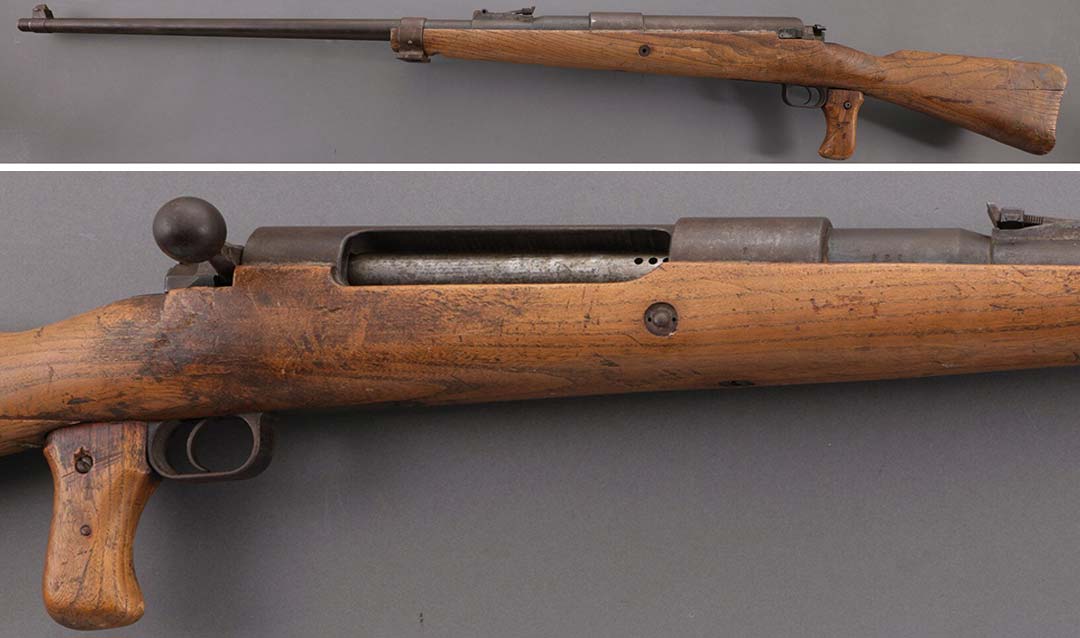
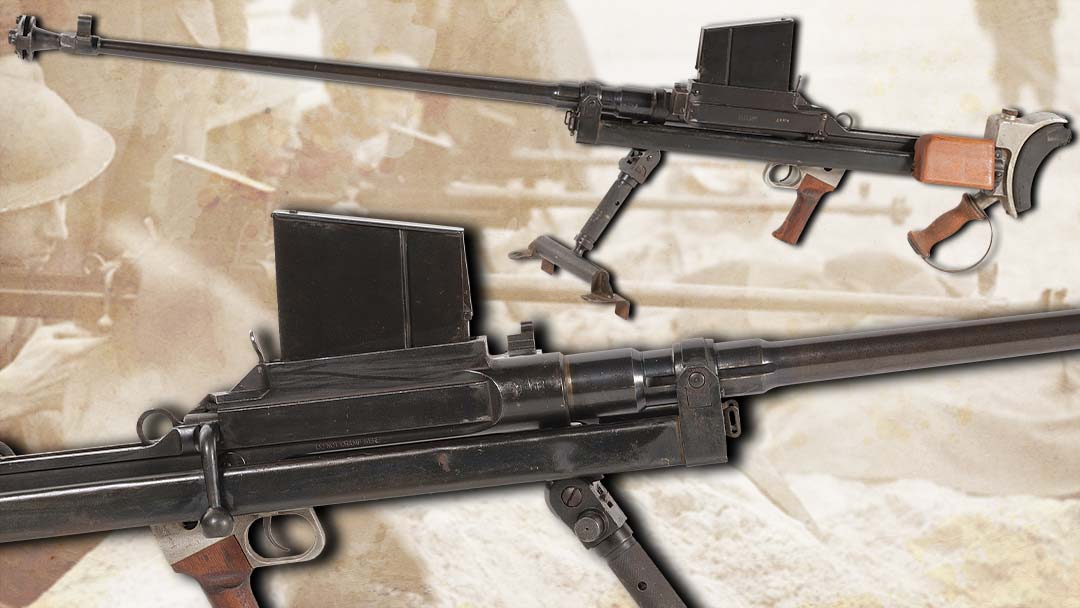
On the military front, the early 20th century saw an innovation in cartridge technology, including large caliber rifles designed to combat the first battlefield tanks. Mauser developed the Tankgewehr Model 1918, an anti-tank weapon that fired the 13.2 mm TuF, one of the biggest bullets of its era for an infantry firearm. This imposing .545 caliber round could punch through 15mm armor.
The defensive capabilities of tanks quickly evolved, and so did the anti-tank rifle. In the early years of WW2, massive bullets like the British .55 Boys, German 7.92x94mm Patronen, and Russian 14.5×114mm were deployed, but these proved increasingly ineffective against anything but light armor. Anti-tank rifles shifted away from bullet-based penetration in favor of the explosive projectiles employed by the PIAT and Bazooka.
.50 BMG
Large caliber ammunition continued to serve in anti-materiel roles, used to punch holes in buildings, vehicles, and bunkers. One of the biggest bullet types fielded for this purpose today is the .50 BMG. The iconic round was conceived in late WW1, after General Pershing pushed for a machine gun bullet of at least .50 caliber with a muzzle velocity that could reach 2,700 feet per second. John Moses Browning would answer the call by scaling-up a .30-06 to .50 caliber for his M1921 machine gun design, giving birth to one of the world’s most iconic rounds.
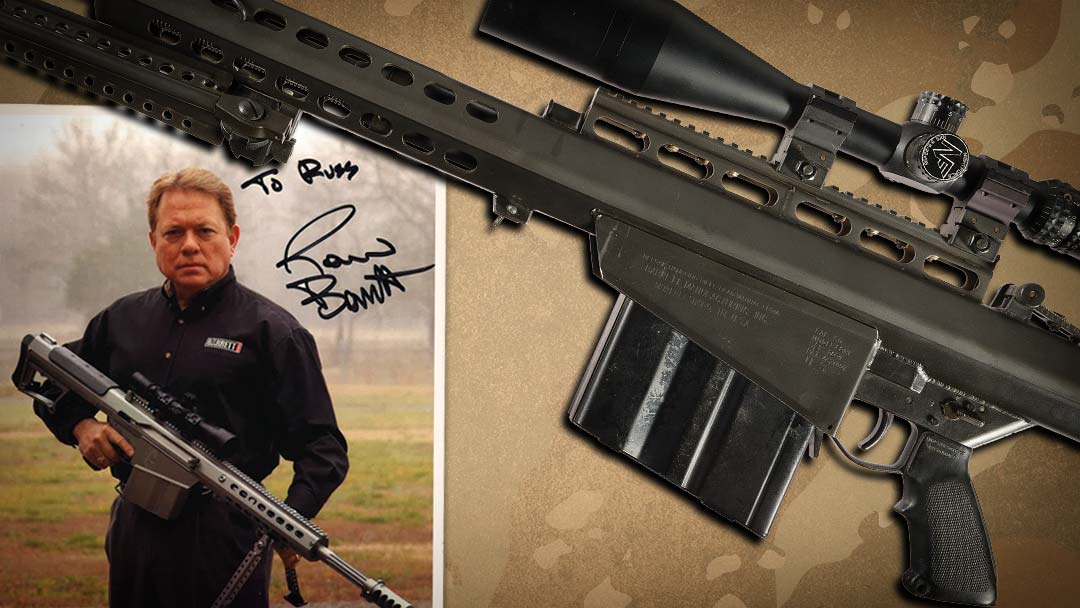
The .50 Browning Machine Gun bullet became an American standard, but it wouldn’t gain traction as a shoulder fired round until the 1980s. Ronnie Barrett, a photographer with no engineering experience, became fascinated with the prospect of a .50 BMG rifle after photographing a pair of M2 machine guns. He drew up sketches and worked with machinist Bob Mitchell on the design. A few months later, a 30 pound semi-automatic prototype was completed.
Numerous refinements would result in the Barrett M82 we know today, an anti-material and anti-personnel gun that was fielded by the U.S. military in Operations Desert Shield and Desert Storm. In 2003, the U.S. Army adopted the Barrett M82A1 as the M107. Numerous sniper kills were recorded with the rifle in Iraq and Afghanistan beyond the weapon’s 1,800 meter maximum effective range.
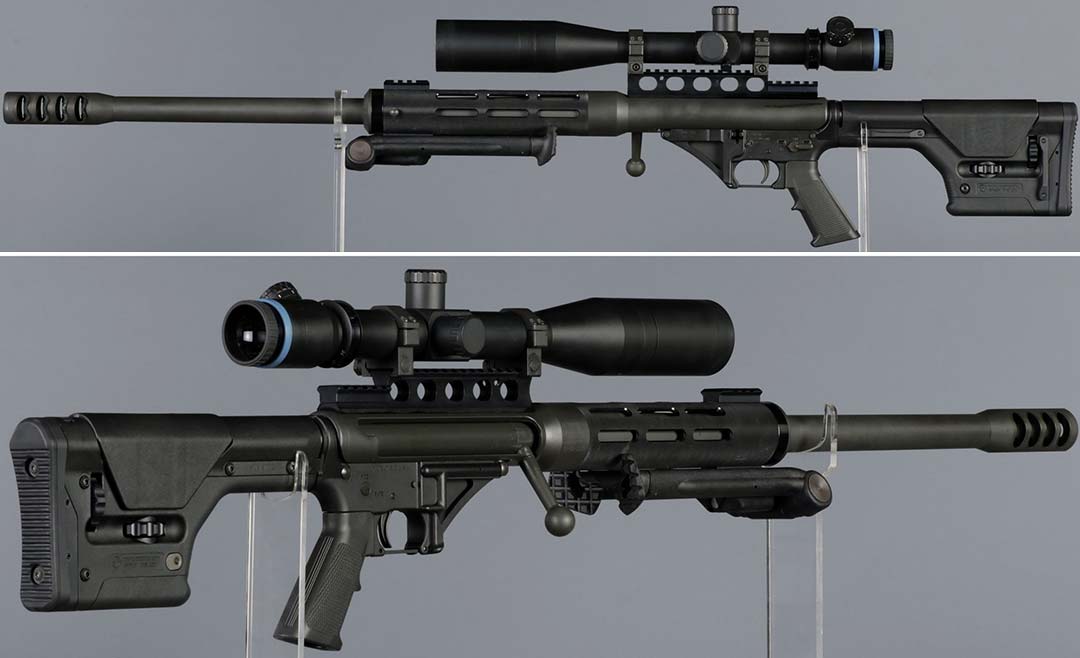
Today, .50 cal is the biggest bullet an American civilian can own without an NFA exemption. The force of these rounds can vary widely, but it’s not uncommon for .50 BMG to reach 2,800 fps and achieve 13,000 foot-pounds of muzzle energy. To help reduce recoil, many rifles chambered for this powerful round are equipped with a hefty muzzle break.
What is the Biggest Bullet From JDJ?
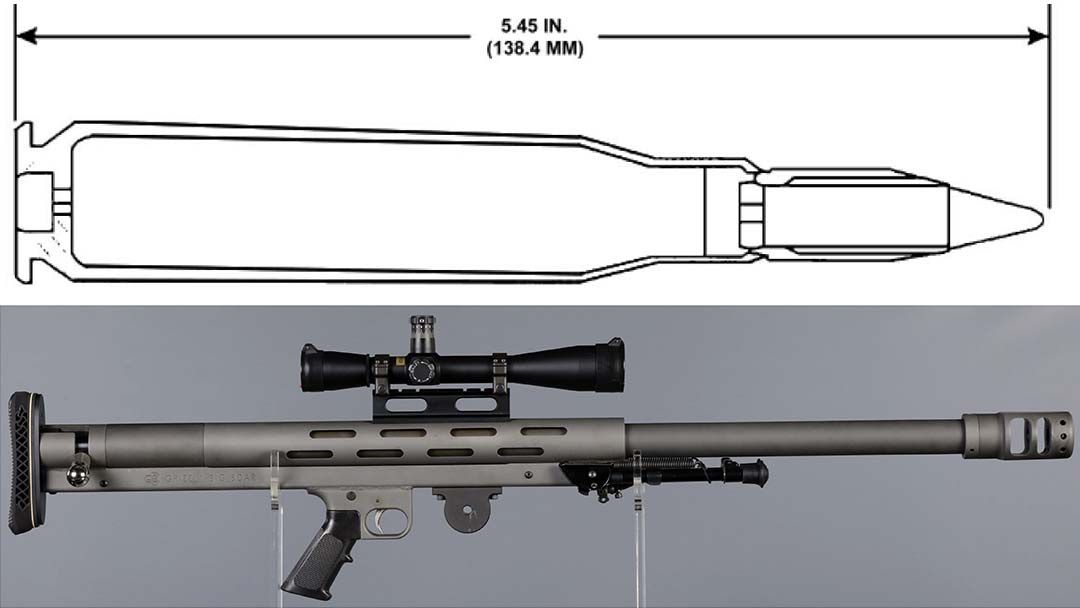
Gunmaker, cartridge designer, handgun hunter, and SSK Industries founder J. D. Jones forged a name for himself with quality hunting arms and ammunition. He also created some of the most powerful large caliber rifles ever designed for civilian shooting, including the 14.5 JDJ, the .700 JDJ, and the mighty .950 JDJ. Each of these heavy hitting rounds required SSK Industries to obtain an NFA exemption.
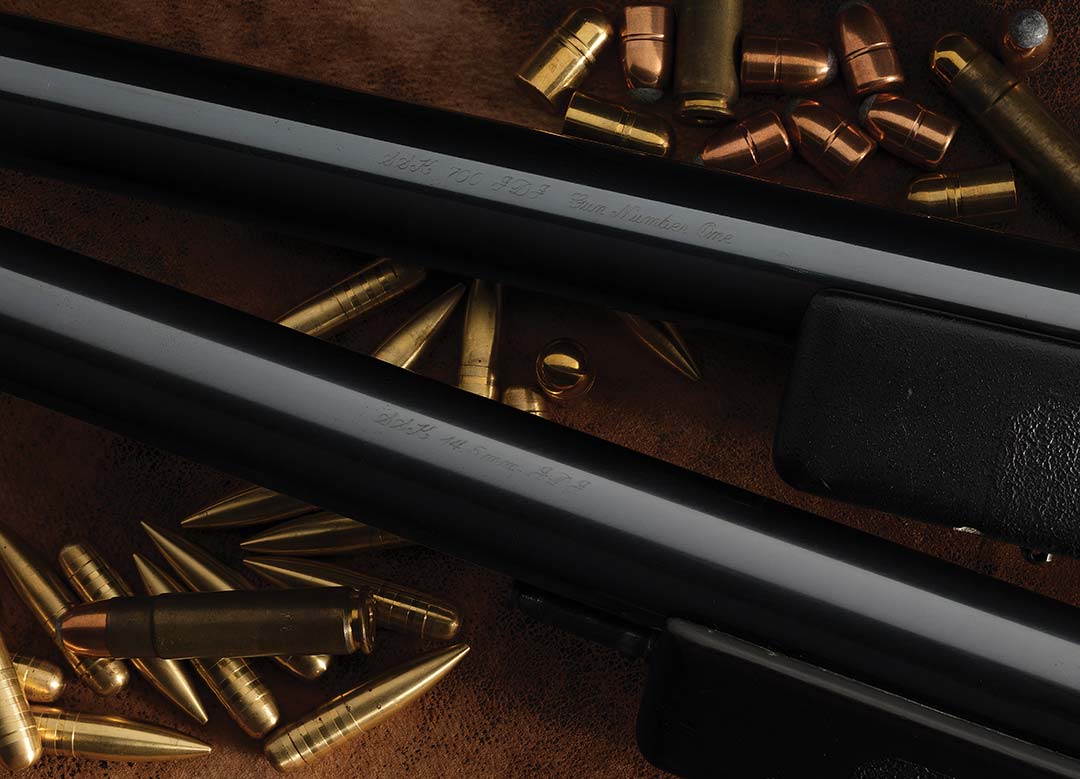
The 14.5 JDJ cartridge is based on a standard .50 BMG with the neck opened to accept the SSK solid brass 14.5mm bullet, a devastating custom cartridge that can launch an 1,173 grain projectile at 2,700 feet per second, generating nearly 19,000 foot-pounds of energy.
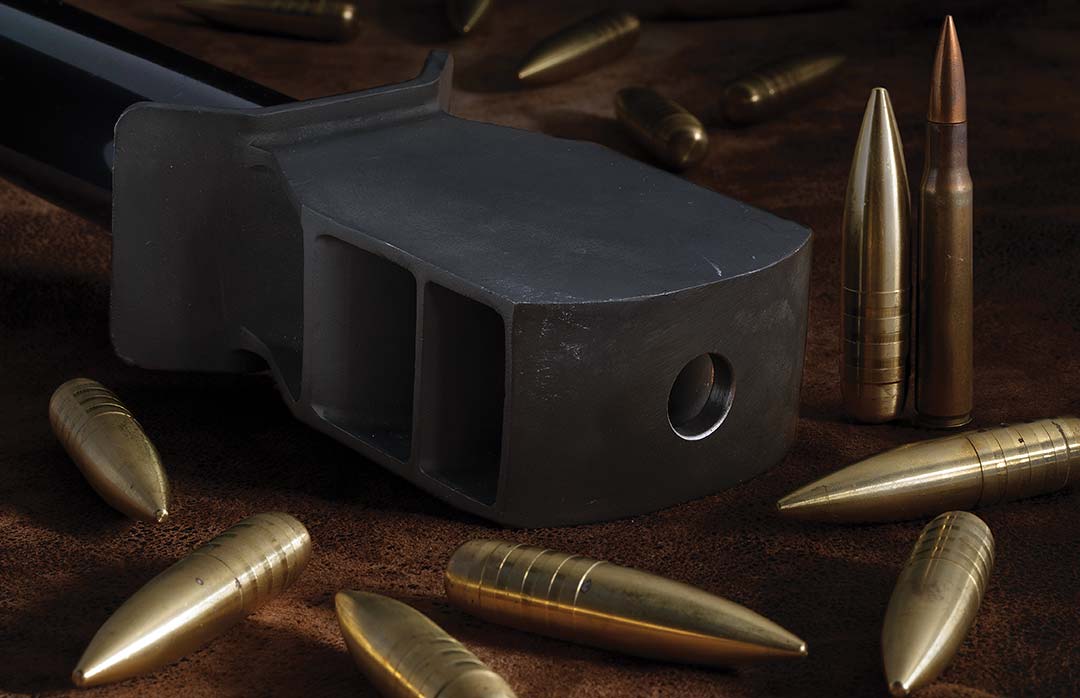
Jones introduced both the 14.5 JDJ and its larger sibling, the 700 JDJ, in 1995. The .700 JDJ also uses a necked up .50 BMG case, though with a notably larger diameter than its 14.5 counterpart. Falling somewhere between the 14.5 JDJ and its larger .950 JDJ cousin in size, the 1,200 grain .700 caliber bullet of the .700 JDJ can be estimated to deliver well over 20,000 foot-pounds of muzzle energy.
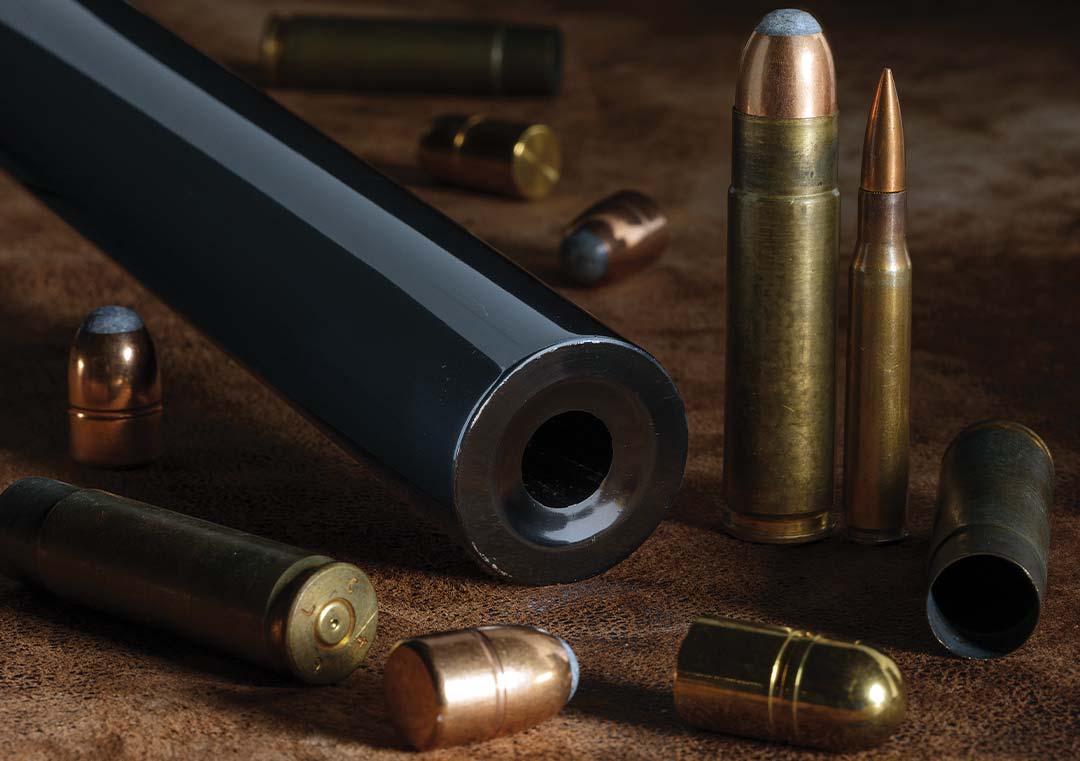
The biggest bullet in the SKS Industries family, the .950 JDJ was based on a 20x110mm Vulcan Cannon cartridge that’s been cut down to a 70mm case length and necked up to 24mm (.95 caliber.) The .950 JDJ fires a 3,600 grain bullet at 2,200 fps for a whopping 38,685 foot-pounds of muzzle energy.
The Biggest Guns and Bullets
For collectors, shooters, and firearm fans of every stripe, Rock Island Auction Company features some of the rarest large caliber rifles ever assembled. From the .50 BMG to the .700 JDJ and everything in between, February’s Sporting & Collector Auction brings out the heavy hitters, and there’s never been a better opportunity to invest in these big bore behemoths.
To receive more gun blogs and gun videos on the giants of the sporting and shooting world, subscribe to the Rock Island Auction newsletter, where we cover topics ranging from classic big bore rifles like the Hawken, the Sharps, and the Trapdoor, lever gun giants like the Winchester Model 1886 and Marlin Model 1895, scattergun monsters like the blunderbuss, the 10 gauge shotgun, the mammoth punt gun, and titans of the handgun world like the Colt Walker, .357 Magnum, Smith & Wesson Model 500, and more.