Offering a middle ground between bulky early machine guns and tough to handle machine pistols, the submachine gun came to dominate the WW2 battlefield and served as a prominent special forces, security, and law enforcement platform in the decades to follow. If you’re looking for an SMG for sale, Rock Island Auction Company’s February 21-23 Sporting & Collector Auction in Bedford, Texas offers the finest assortment around.
What Are Submachine Guns?
Submachine guns, often dubbed “subguns” or “SMGs,” are usually defined as compact, select fire weapons that feed from a removable magazine and are chambered in pistol rounds like 9mm and 45 ACP. Designed for close-quarters combat and maneuverability, most submachine guns feature short barrels and a lightweight construction.
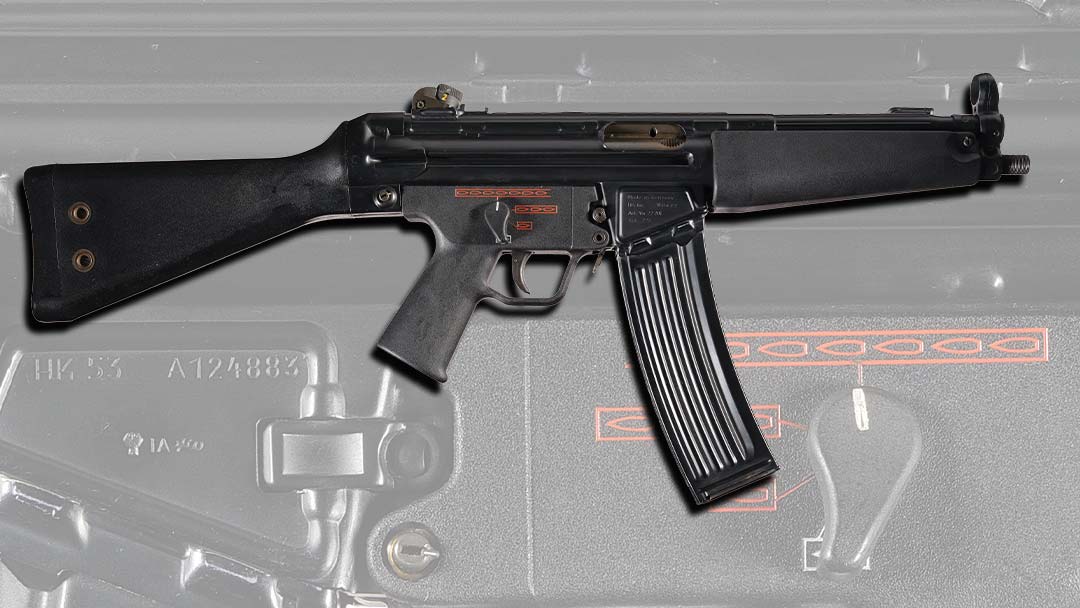
In recent decades, certain automatic short barrel carbines have blurred the line between subguns and light machine guns, like the AKS-74U, Mk18, and H&K53. While some nations place these models in the same legal category as submachine guns, the three examples mentioned above are chambered in intermediate caliber bullets.
To add further confusion to defining submachine guns as a class, British Commonwealth countries sometime use the term “machine carbines.” Other nations, like Germany, describe the submachine gun class as “machine pistol” or “Maschinenpistole.” This should not be confused with the machine pistol classification used by many American arms collectors, which references full auto handguns like the vintage M1932 Schnellfeuer and the Heckler & Koch VP70.
The Submachine Gun Term
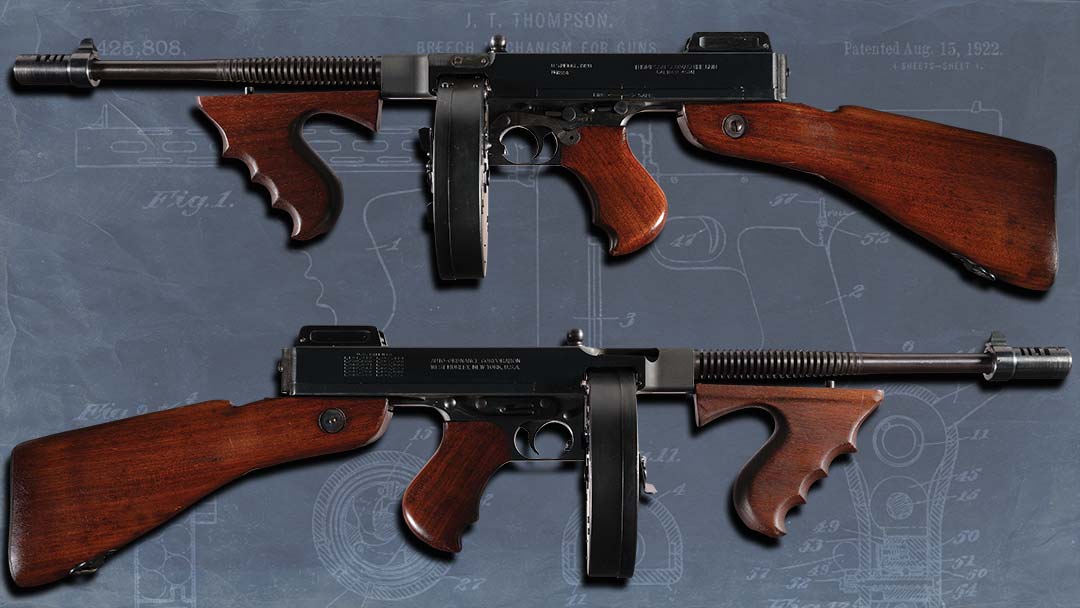
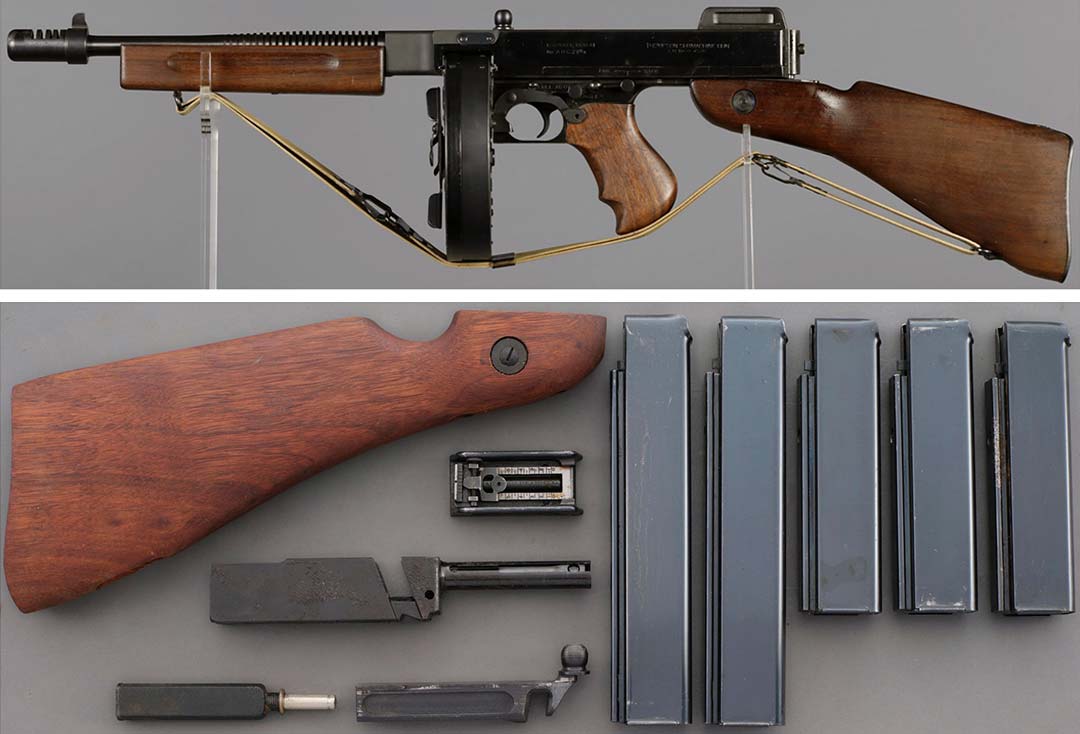
John Taliaferro Thompson, a retired army Colonel who co-founded the Auto-Ordnance Corporation in 1916, coined the term “submachine gun” to promote his new compact, fully automatic firearm. Colloquially dubbed the “Tommy gun,” the weapon’s official name during its first commercial production run was “The “Thompson Submachine Gun, Model of 1921.”
The first appearances of the term “submachine gun” in print are found in 1919, when Thompson began presenting his invention to various law enforcement agencies like the NYPD. By late 1920, “submachine gun” had become a widely adopted designation in the media. The Oklahoma Greenfield Hustler described the Thompson as “really a machine gun in the form of a pistol.”
Most media gave the new Thompson high praise for its potential in quelling riots, chasing down auto thieves, and its military applications. The New York Herald, for instance, appreciated the submachine gun for its ability to “spray like a hose” and enable “even the inexperienced marksman to shoot with the effect of a Bill Cody.”
Other papers were more cynical, with a September 20, 1920 article in the New Brunswick Telegraph-Journal writing “We are not quite sure the submachine gun ought to be welcomed with much effusiveness. The automatic pistol [semi-automatic by today’s standards] was hailed as the finest thing in the world to enable the police to cope with armed burglars and other ruffians. It was – until the burglars themselves obtained automatics.”
Early Subguns
A few years before the Thompson began development, several early submachine guns had already hit the battlefield. The Italian “Villar Perosa,” Chambered in 9mm Glisenti, became the world’s first battlefield SMG, though it was originally intended as an aircraft weapon and a defensive platform. The gun’s “Pistola Mitragliatrice Fiat Mod. 1915” designation translates to “pistol machinegun.”
The German Bergmann Waffenfabrik Maschinenpistole 18, or MP18, hit the field in the final months of WW1. Employing a 32 round “Trommelmagazin” snail drum magazine developed for the 1914 Artillery Luger, the 9mm weapon performed well and became a major influence in the design of numerous next generation subguns.
Subguns in WW2
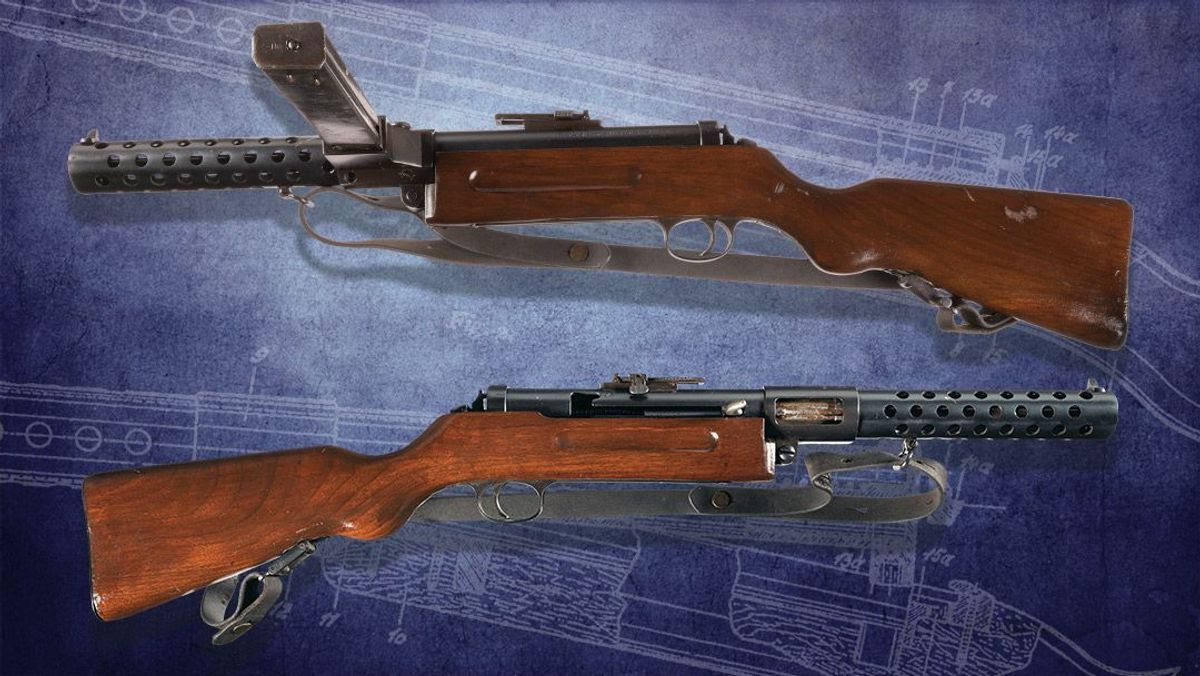
The MP18 demonstrated the advantage lightweight automatic weapons offered in up close engagements. Pieper Bayard of Belgium modified the design to feed from Hugo Schmeisser’s straight double-stack magazine, resulting in the MP28. This model served as the basic blueprint for a host of next generation SMG models, including the STEN, Lanchester, Beretta 38, and PPSH-41.
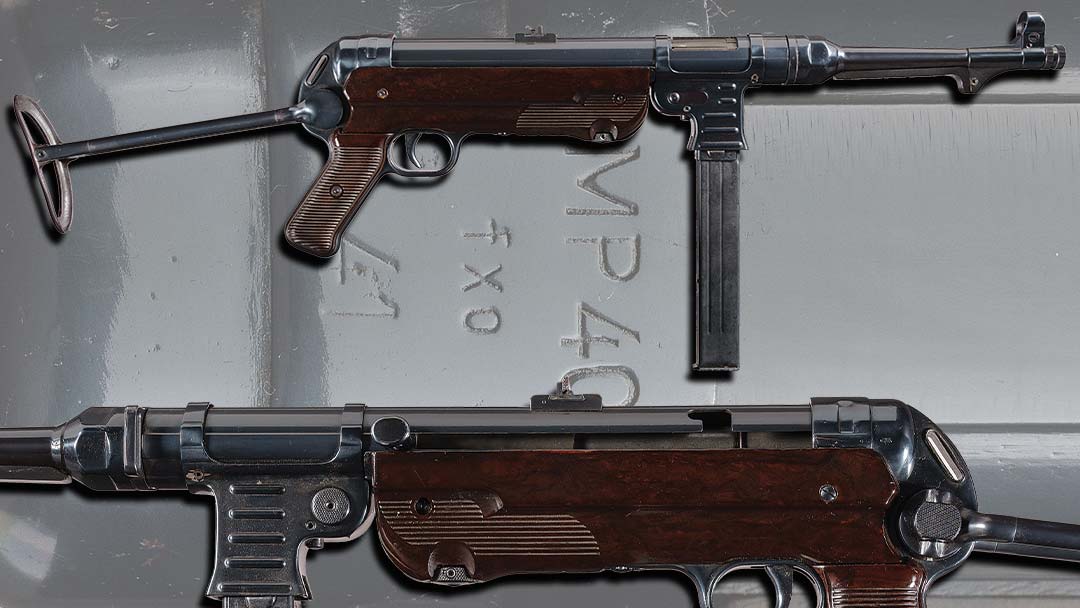
The German MP38 and later MP40, which also employed a Schmeisser magazine, became some of the best known submachine guns of WW2. Engineered for mass manufacturing, the Maschinenpistole 40 made extensive use of metal stampings and synthetic materials, achieving a rugged yet simple to produce design. The MP40 was commonly equipped to infantry leaders, paratroopers, and armored vehicle crews who would find carrying a full-sized rifle impractical.
In the late 1920s, the U.S. Marine Corps deployed a limited number of Thompson submachine guns during the Nicaraguan Campaign. The U.S. Navy adopted the weapon in 1928, yet the U.S. Army would initially reject the Thompson, citing concerns that the SMG was “an undesirable weapon, effective only at short range.”
A decade later, with war in Europe and Asia raging, U.S. Army Ordnance would finally to accept the Thompson into its arsenal in the form of a parkerized version designated the M1928A1. The United Kingdom, lacking any standard issue submachine guns, purchased over 100,000 Thompsons.
While the Thompson SMG was an effective weapon, its milled steel receiver was costly and time consuming to produce. Even the streamlined M1 version couldn’t keep up with soaring demand, so both the Americans and the British turned to cheaper sheet steel subguns with tube receivers.
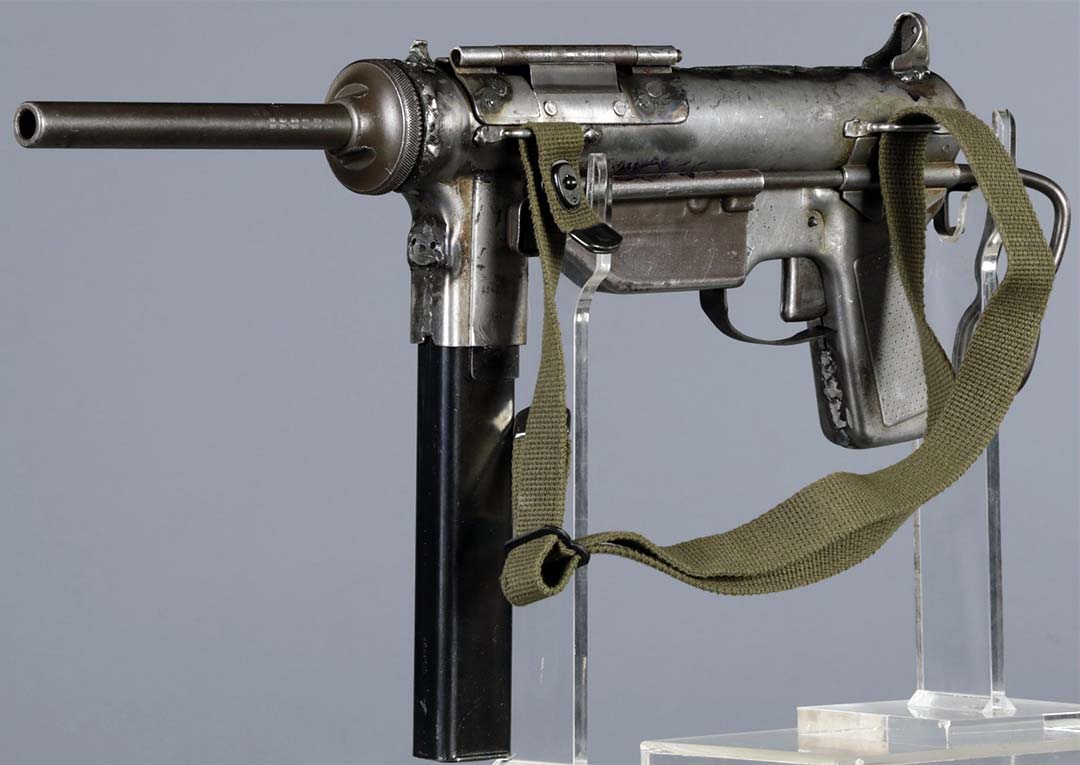
While America opted for the M3 “grease gun,” Britain developed the STEN line of SMGs. The STEN saw over 4 million units manufactured across all variations, becoming the second most produced submachine gun of the war. Only the Russian PPSh-41 would surpass it, with over 5 million manufactured. By 1944, a quarter of Red Army infantry battalions carried subguns, and the British weren’t far behind their Russian counterparts.
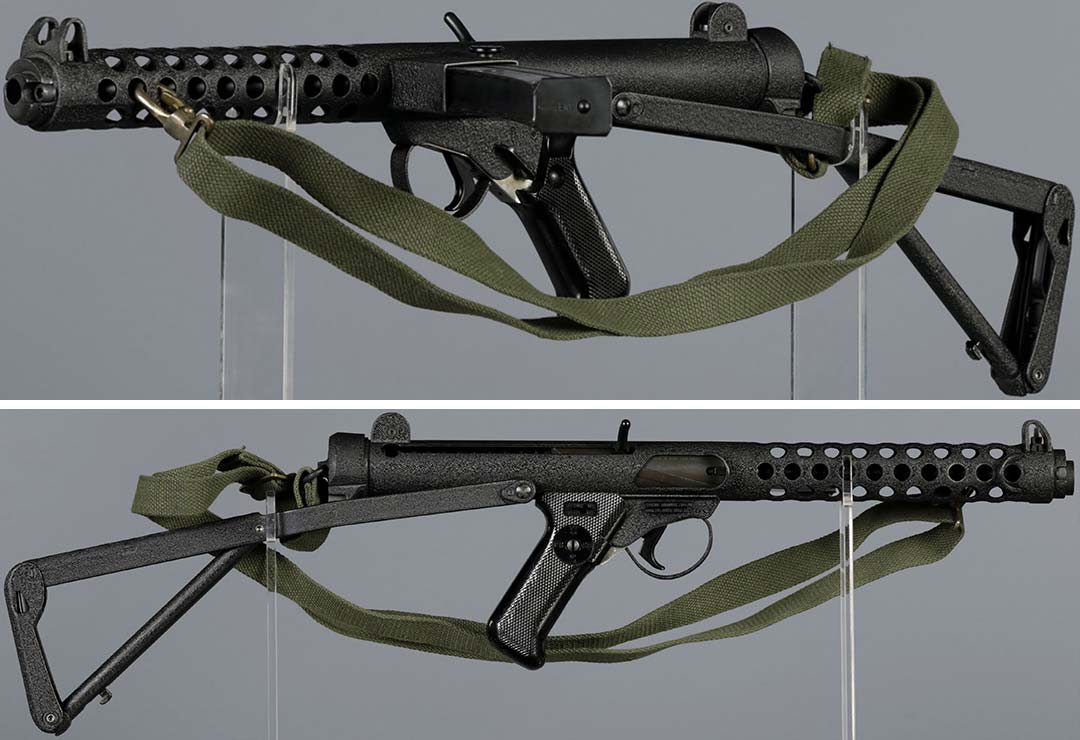
Though a competent SMG, the STEN was found lacking in several areas. The British Sterling started development late in the war and offered a more reliable bolt, better balance and accuracy, and a 34 round double column, double feed magazine that could be loaded more easily than its STEN predecessor. During WW2, the Sterling was only deployed in limited numbers for combat trials, but it became one of the most long-lived post war military submachine guns.
Subguns After WW2
The submachine gun revolution continued into the post war years. While the British Sterling remained in service until 1988 and America’s M3 grease gun saw continued use well into the Vietnam War, a host of new SMG models were developed around the globe.
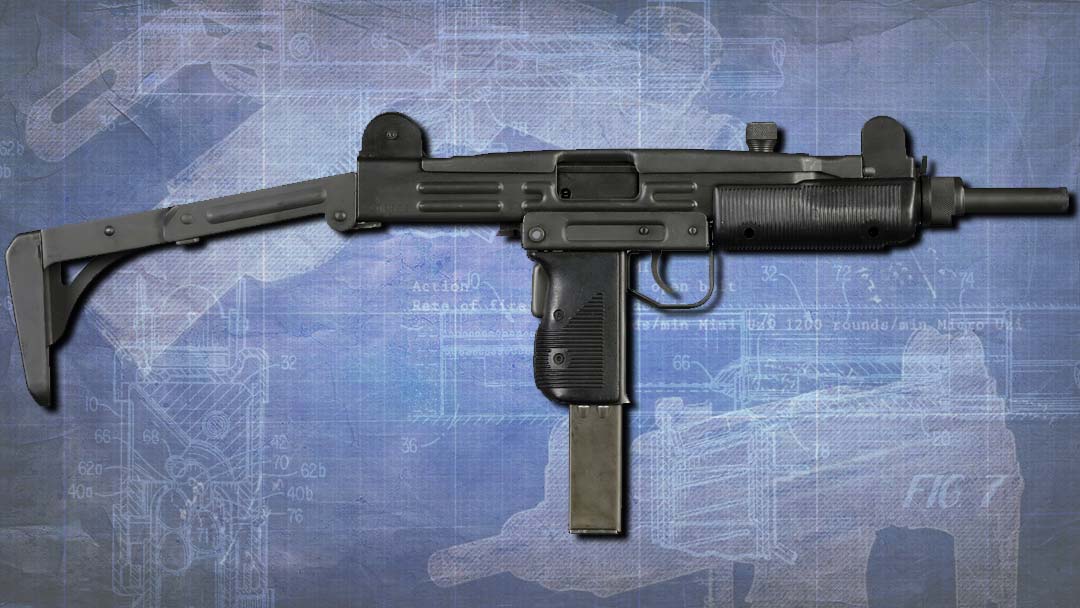
Designed in the 1950s by Israeli inventor Uziel Gal, the Uzi became a standard for IDF paratroopers, armored crews, and covert operation commandos involved in indoor combat. The Uzi also proved a popular option with security forces and protective agencies such as the U.S. Secret Service.
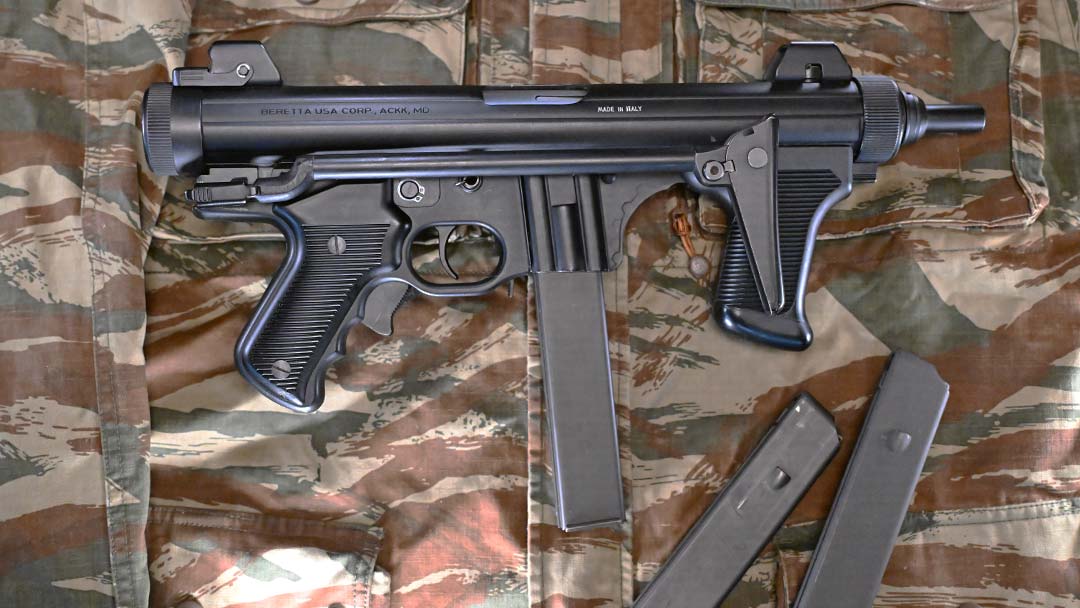
Numerous submachine gun models were introduced over the next few decades. In 1959, the Beretta Model 12 was issued to various Italian law enforcement agencies and military police. The platform saw wider production in 1978 with the Beretta Model 12S, which redesigned the safety and selector to an integrated switch arrangement.
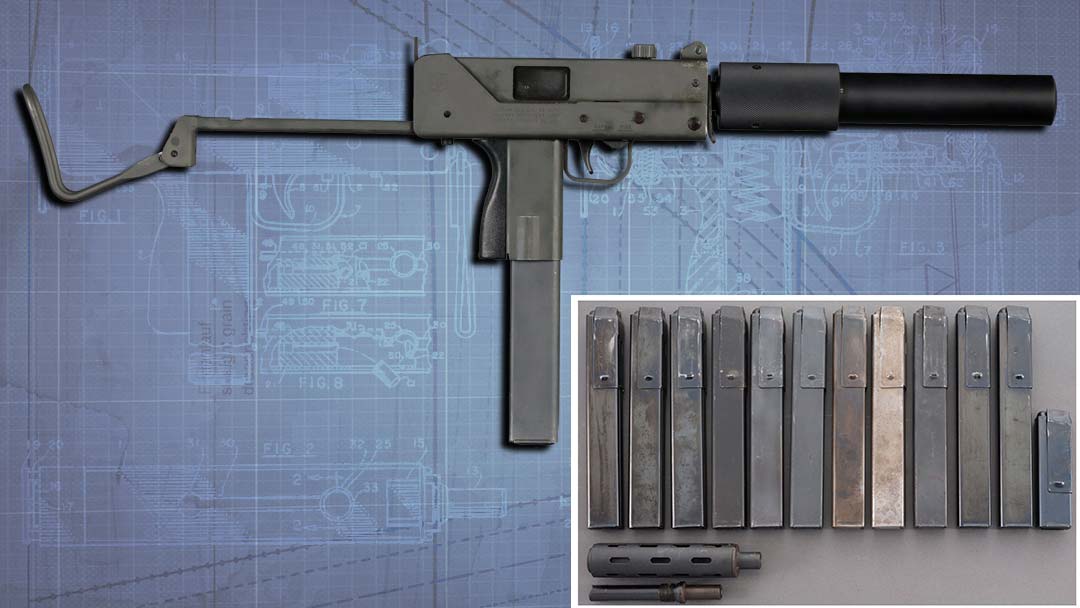
The Ingram M10, famous known as the MAC-10, was invented by American Gordon Ingram and produced in 1970 by Military Armament Corporation. Recognized for its distinct boxy, stamp-steel welded profile, the model’s low price point failed to garner many military contracts, though it did become one of the more popular Hollywood action guns.
The Swedish M45, also referred to as the Swedish-K SMG, was manufactured by the Carl Gustaf firm starting in 1945. Adopted by the Swedish Army, the model’s reliability earned it a reputation as one of the finest submachine guns available, particularly with American Green Berets and Navy SEALS in Vietnam.
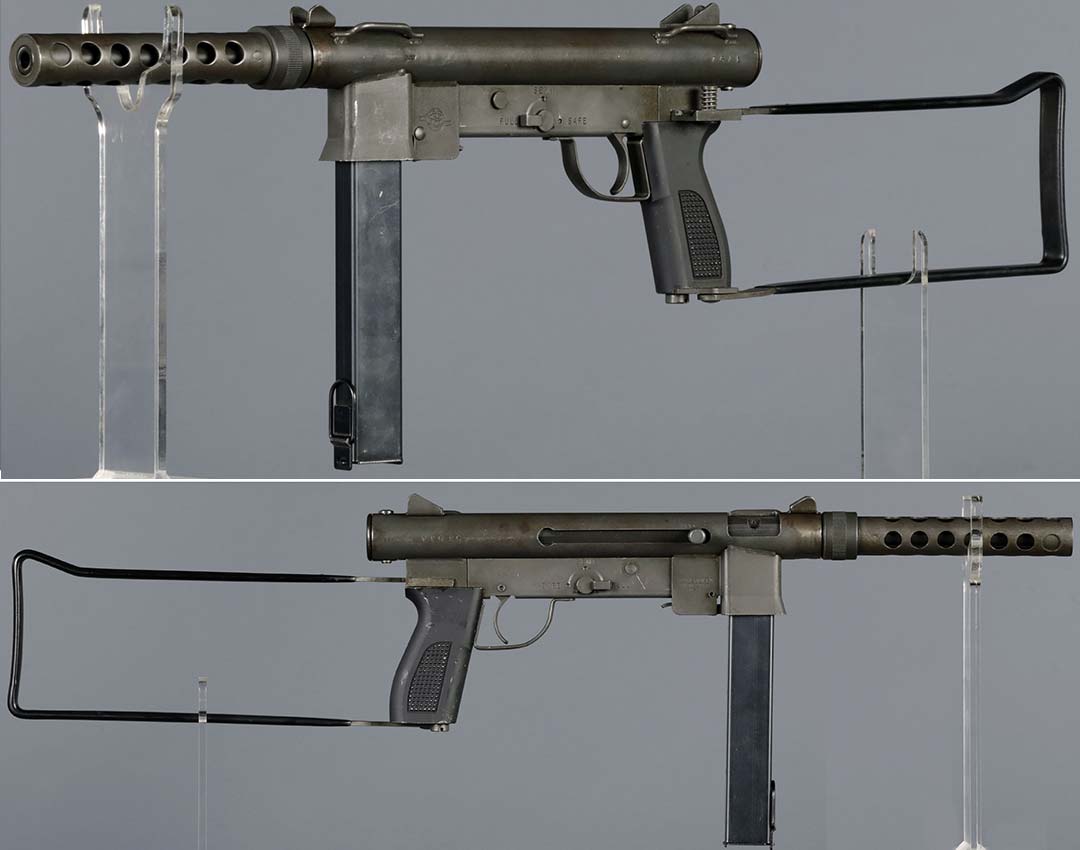
The Swedish government remained neutral in the conflict and refused to sell arms to waring nations as a matter of policy, cutting off additional supply in 1966. Smith & Wesson was approached by the U.S. Navy to produce a similar SMG, and the result was the S&W Model 76.
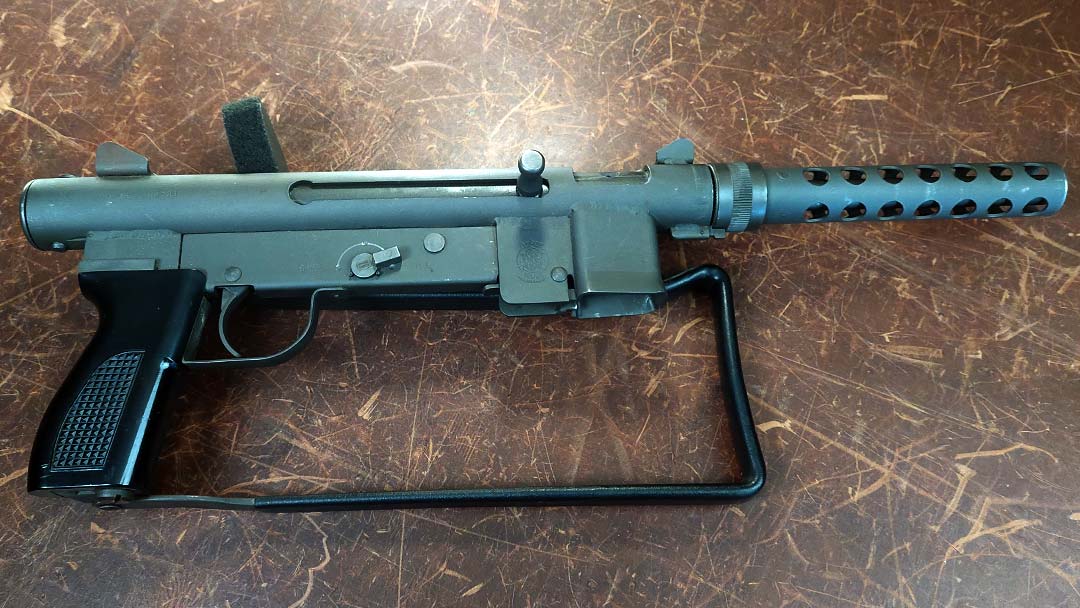
In addition to the American military, Smith & Wesson sold the Model 76 to police agencies and to the general public. MK Arms Company acquired the rights to the model and produced copies designated as the MK760 starting in 1983.
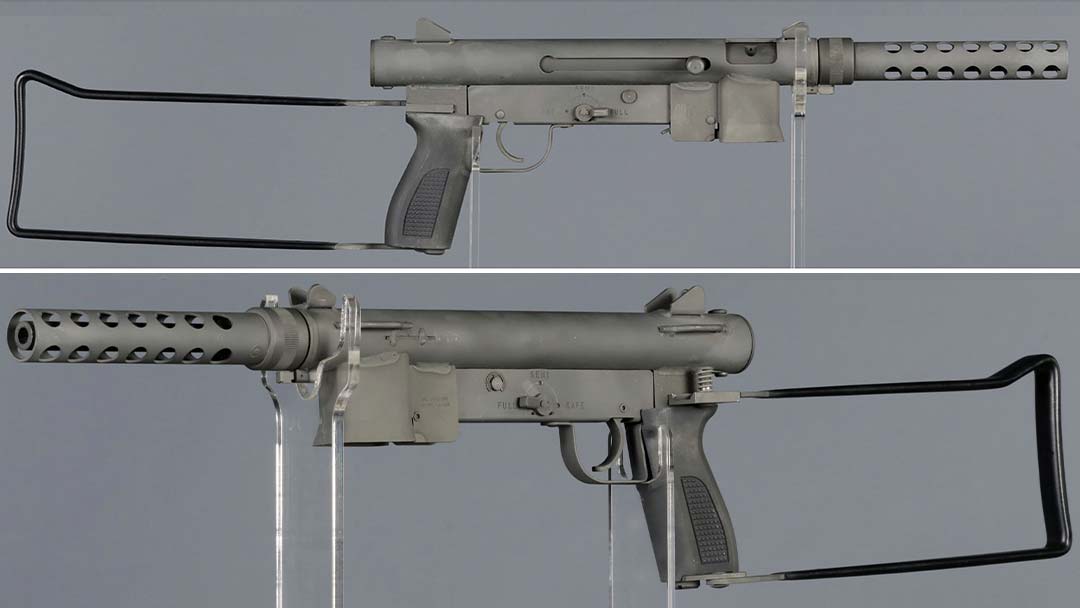
Other clones included the Burgess SW 76 from JMB Distribution, the SW 76 from John R. Stemple, and the M76A1 from Global Arms/Southern Tool, a principal partner of MK Arms before the two companies parted ways. These types of custom subguns that used a combination of surplus and newly manufactured parts were fairly common before the 1986 Firearms Owners Protection Act ended the production of new machine guns in America.
Submachine Guns Today
With the rise of short barrel assault rifles in the 1980s and 1990s, subguns became less prevalent in mainstream combat roles, though the platform continued to serve SWAT teams, security agencies, and counterterrorism forces. Offering exceptional maneuverability, ease of operation, and the ability to be easily suppressed, comparatively modern SMGs like the German H&K MP5 and UMP 40, the Czech CZ Scorpion EVO 3, and the Swiss B&T MP9 continue to serve around the world.
SMGS for Sale
For the arms collector, submachine guns represent a fascinating look at the evolution of portable firepower, offer tremendous investment potential, and they’re just plain fun to shoot. While semiautomatic only versions of many popular models are also available, the exhilaration of firing a full auto SMG is a thrill that can’t be substituted.
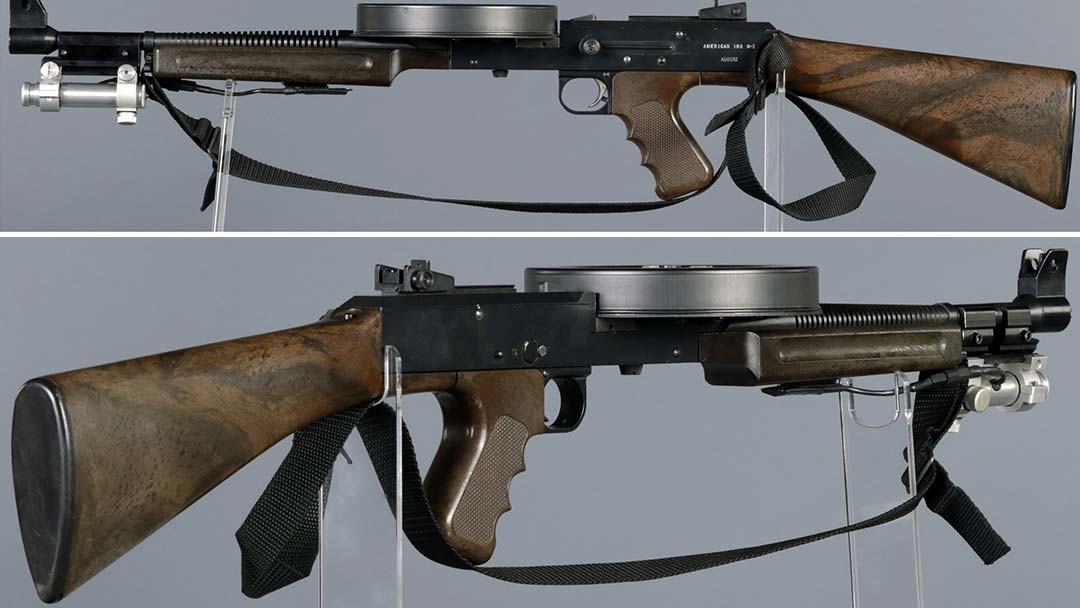
Whether you’re looking to buy a Tommy gun, an Uzi, a Mac-10, or a Beretta 12S, RIAC’s February auction offers a hard hitting selection of SMGs for sale. With a finite number publicly available, these compact powerhouses consistently punch above their weight class on the auction block, so there’s no better time to get in on the action.
Subscribe to the Rock Island Auction newsletter to receive new gun blogs and gun videos on all things machine gun. From WW2 rarities like the FG42 paratrooper rifle, the Johnson LMG, and the Japanese Type 99, Vietnam innovators like the AR-15 and Stoner 63, and heavyweights of the genre like the M60 and M240, we cover machine guns from every era.