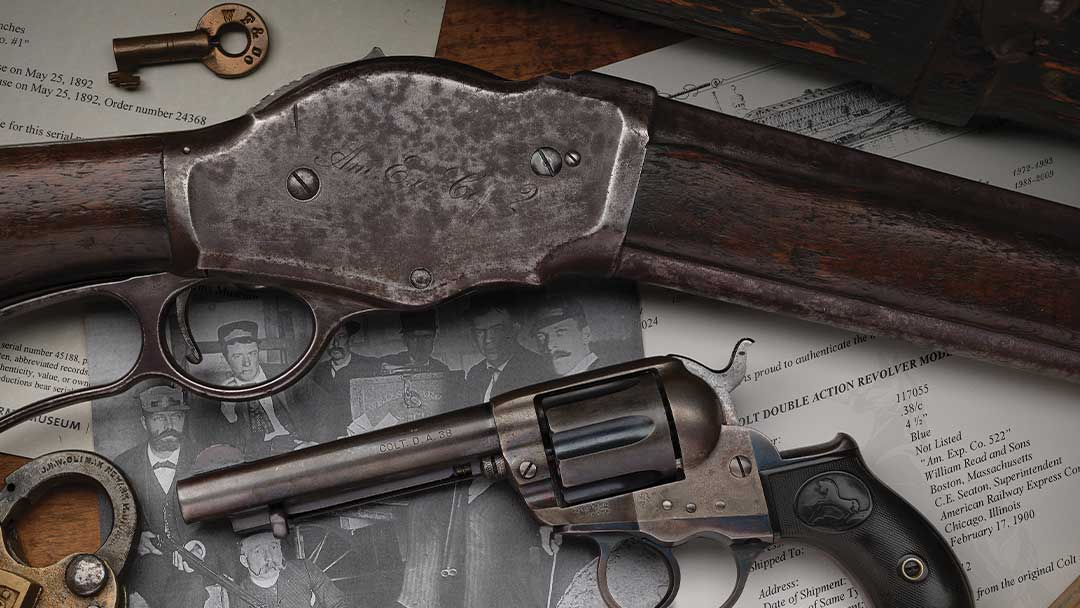
The classic Winchester lever action evolved into numerous models, earned many names, and served in countless roles around the world. Known for its innovation and adaptability, the Winchester repeater could put lead downrange faster than its single shot counterparts and came to define the American cowboy alongside the Colt revolver.
From Benjamin Tyler Henry’s groundbreaking “Damn Yankee rifle” to the Yellowboy, the Centennial model, and the gun that won the West, we’ll look at the many faces of the Winchester repeater throughout the 19th century and examine some of the finest pieces offered in RIAC’s December 6 – 8 Premier Firearms Auction in Bedford, Texas.
Road to the Winchester Repeater
The July 29, 1848 issue of the ‘Saturday Morning Visitor’, a paper in Warsaw, Missouri, praised a new firearm that Lewis Jennings had patented, noting the gun was, “a repeating rifle, capable of discharging forty balls a minute,” where each charge could be “brought to its place by moving a slide with the fore finger, which can be done in an instant.”
The terms “repeating rifle” and “repeater” saw common use for decades before the Jennings and its successors, usually referring to Colt Paterson revolving rifles or the crop of competing designs introduced in the 1830s and 1840s. But it was the Volcanic line of repeating firearms that would truly popularize the term.
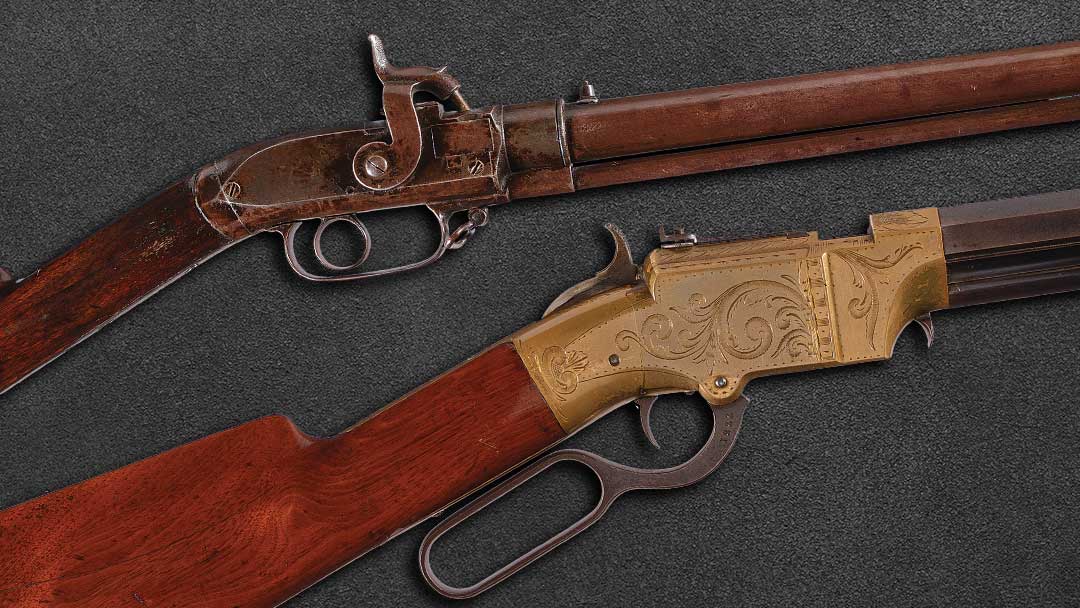
Henry’s Patent repeating rifle, often shorted to the Henry repeating rifle or Henry repeater, was a dramatic improvement over the Volcanic design. A larger frame and an ejector system allowed the weapon to chamber the new .44 caliber rimfire cartridge. The Henry’s capacity, 15 rounds in the tube magazine plus one in the chamber, also earned the rifle the “Sixteen Shooter” moniker.
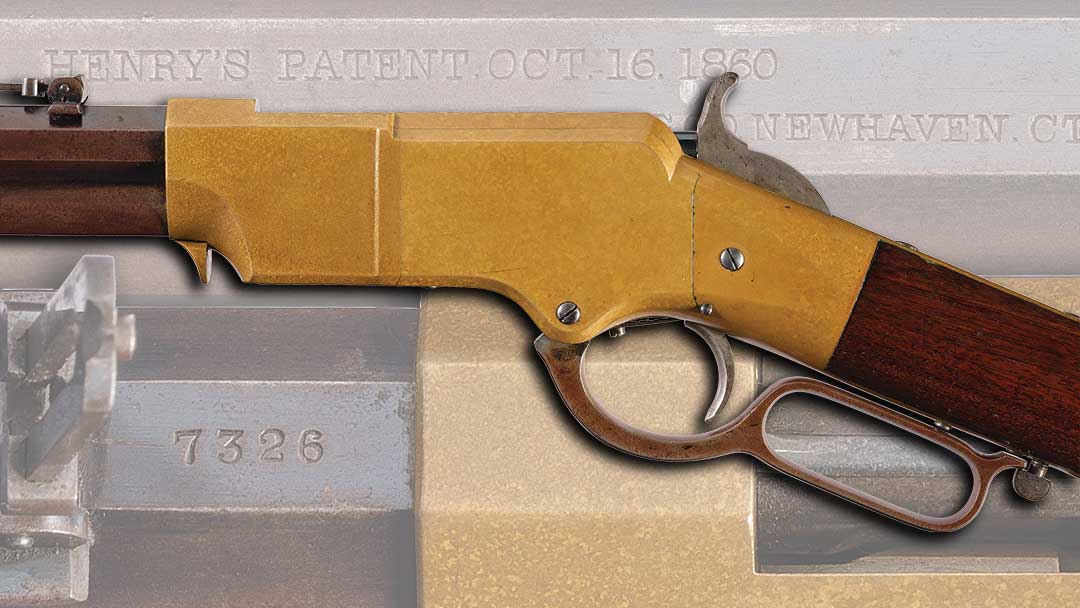
Manufactured from 1860 to 1866, up to 14,000 Henry repeaters were produced, a significant improvement over the Volcanic line, which saw fewer than 8,000 manufactured across all models. 1,731 Henry rifles were delivered to the U.S. Ordnance Department during the Civil War, with thousands more acquired by soldiers through private purchase.
The Henry repeater earned another notable nickname thanks to its prowess on the battlefield. Major Joel W. Cloudman of the 1st D.C. Cavalry, in a letter to Oliver Winchester, said that when he was held by the Confederates in Libby Prison near the end of the war, he often overheard his captors discussing the Henry rifle, recalling one of them saying, “Give us anything but that damned Yankee rifle that can be loaded Sunday and fired all week.”
The First Winchester Repeater
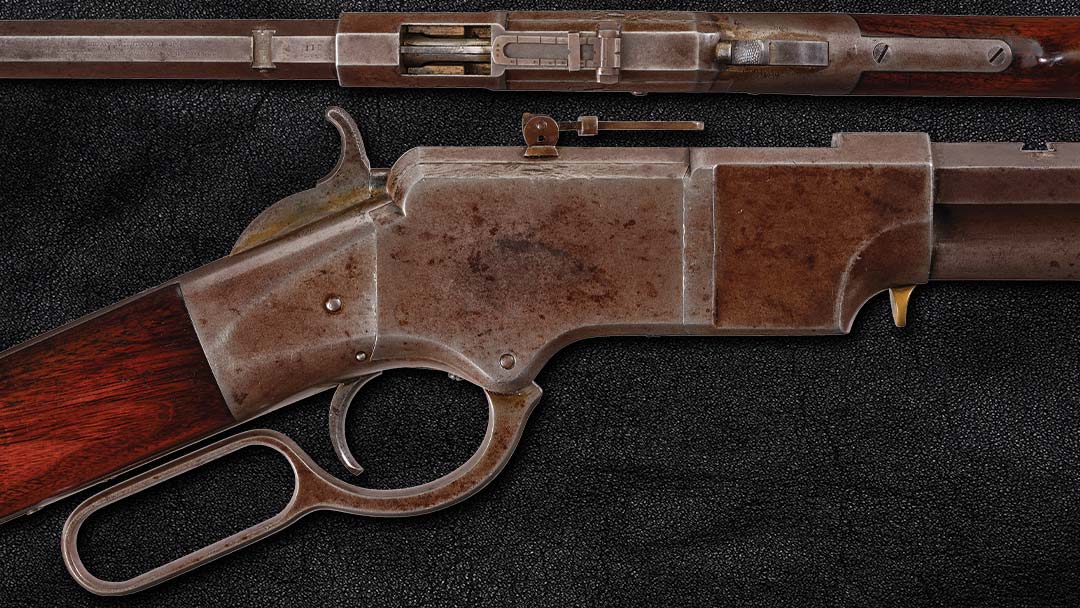
The original Winchester repeater, the Model 1866 became the first lever action to bear the company’s name. Introduced as “The Improved Henry” and the “Winchester Repeating Rifle,” the Model 1866 was also sometimes advertised by distributors as “Sixteen Shooter,” a carryover from the weapon’s forebears despite the rifle and musket variant of the new model offering a greater capacity than the Henry.
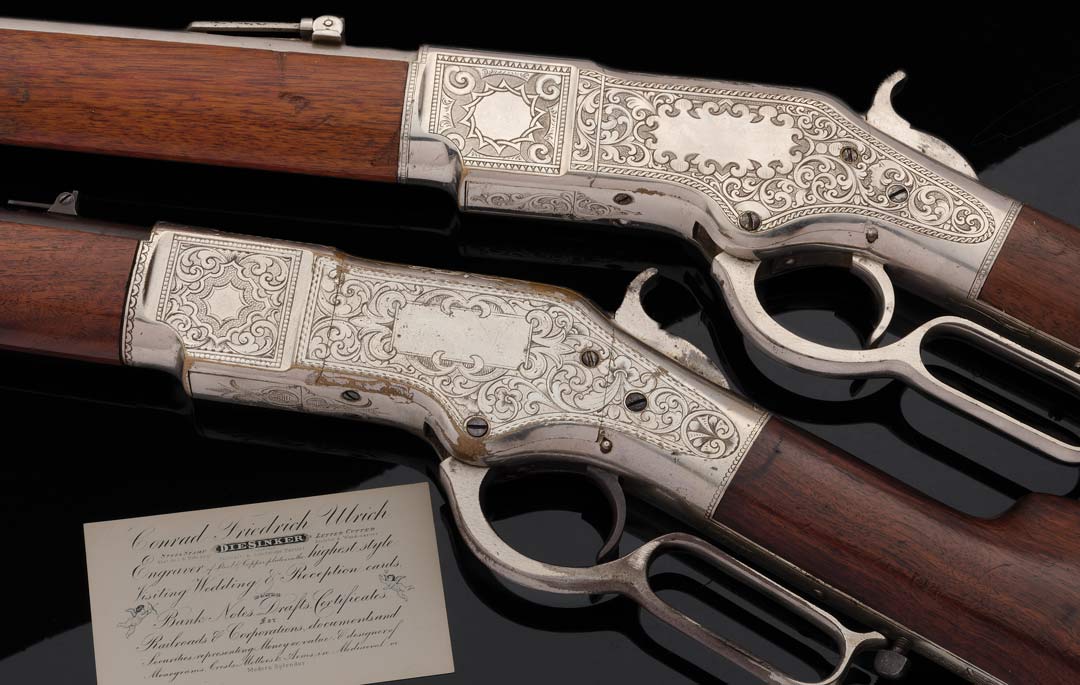
The original Winchester repeater earned its more enduring nickname, “Yellowboy,” due to the color of its frame, sideplates, buttplate, and forend cap. Like the Henry, the Model 1866 employed gunmetal, or “red brass,” a type of bronze alloy composed of copper, tin, zinc, and occasionally a small amount of lead. The metal was easy to machine and resistant to corrosion, a clear advantage on the harsh American frontier and the far-flung battlefields of Europe, Japan, and South and Central America.
The Model 1873 Winchester Repeater
An article in the November 06, 1877 edition of the ‘Idaho Semi-Weekly World’ illustrates how the people of the era perceived the evolution of the Winchester repeater up to this point. “The American Henry was first brought to notice with the title of “Volcanic Repeater,” then changed to as to use copper cartridges, and introduced as the Henry. After an improvement of the magazine it was known as the Winchester, and a subsequent alternation in the cartridge made the Improved Winchester.”
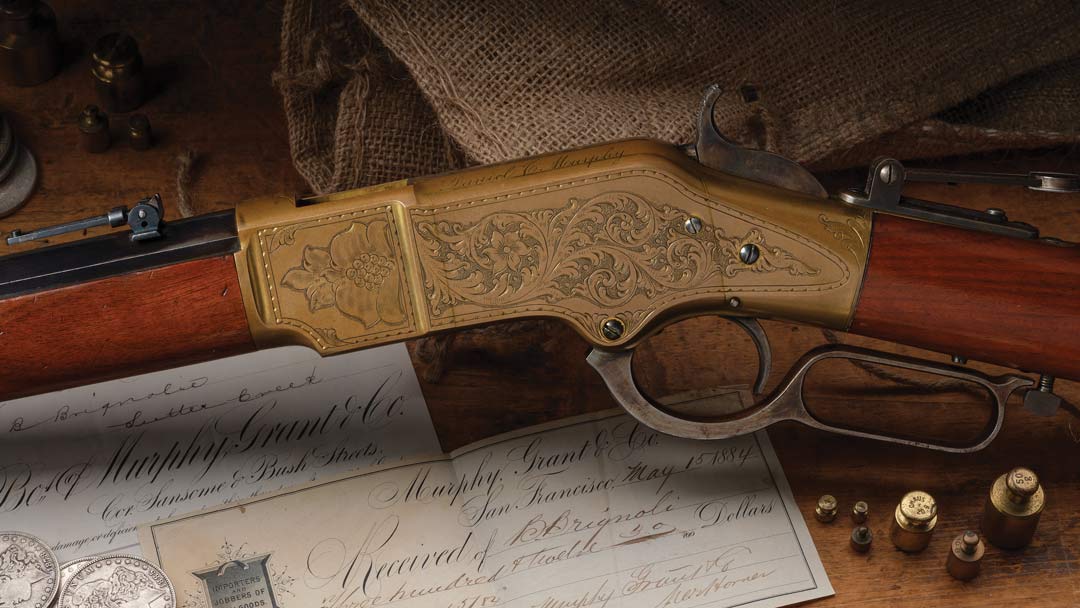
The introduction of this improved Winchester repeater in late 1873, a steel-framed design chambered in a .44-40 centerfire cartridge, also marked the start of the official naming conventions we know today. By 1875, the first year the new Winchester became available in appreciable numbers, distributors like John Skinker of San Francisco started advertising the gun as “Model 1873” to differentiate it from previous and future models.
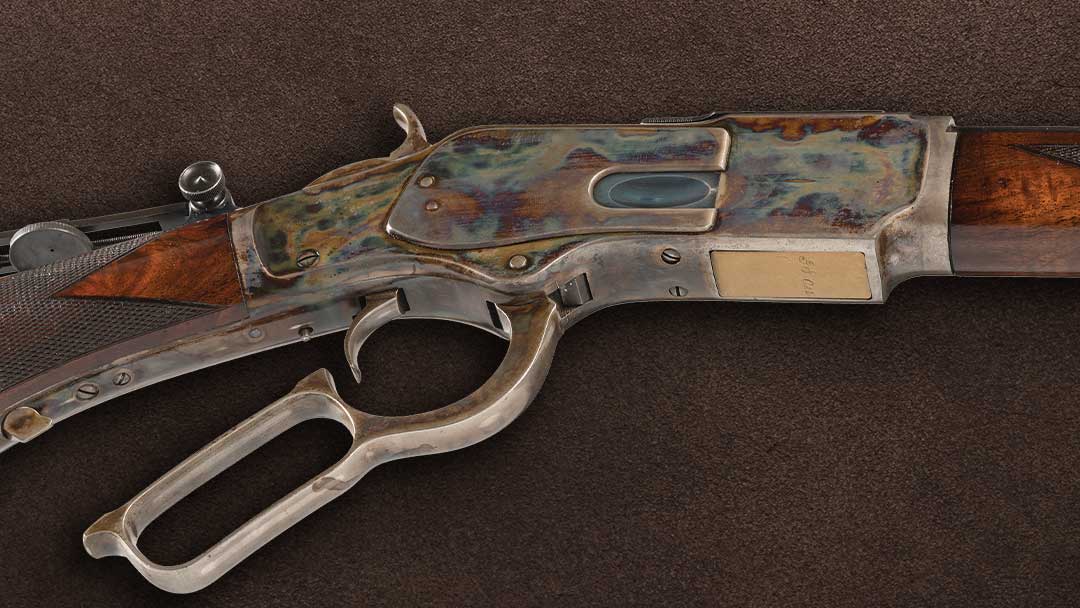
If the Model 1866 put the Winchester repeater on the map, the Model 1873 made the platform a household name. In 1875, Buffalo Bill Cody wrote to Winchester with high praise for the new firearm, noting, “I have tried and used nearly every kind of gun made in the United States, and for general hunting, or Indian fighting, I pronounce your improved Winchester the boss.”
Today, the Model 1873 is widely hailed “Gun that Won the West.” According to author and former curator of the Winchester Arms Museum Herbert Houze, Winchester had used the phrase as least as far back as 1919 in an international marketing campaign. The collection of documents housed in the McCracken Research Library of the Buffalo Bill Center of the West contains numerous examples, but the phrase gained far greater notoriety in 1950 with the release of Universal-International’s ‘Winchester 73’ film starring James Stuart.
The Model 1876 Winchester Repeater
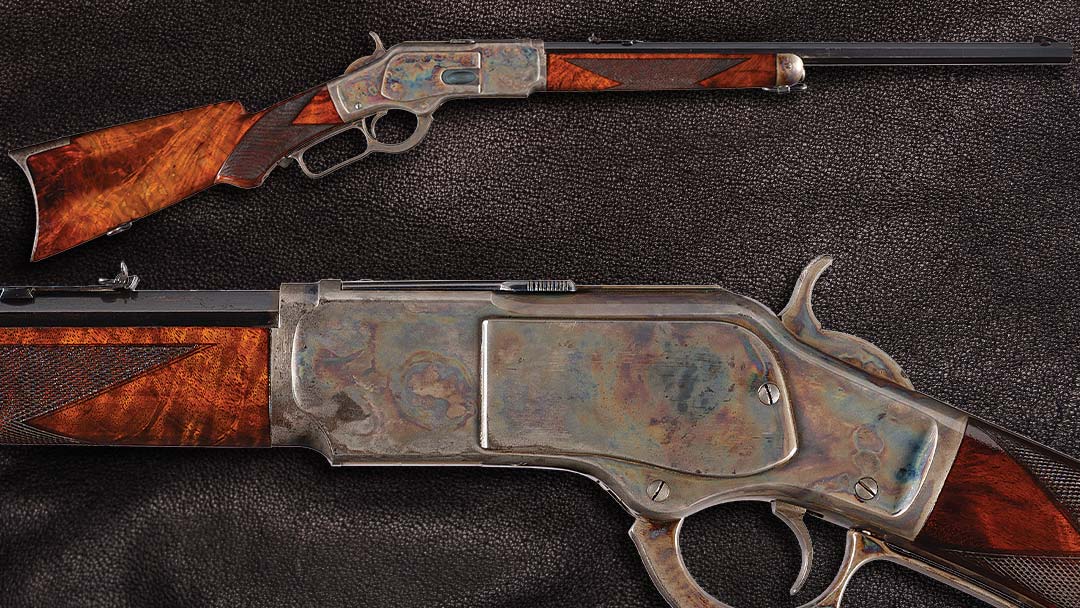
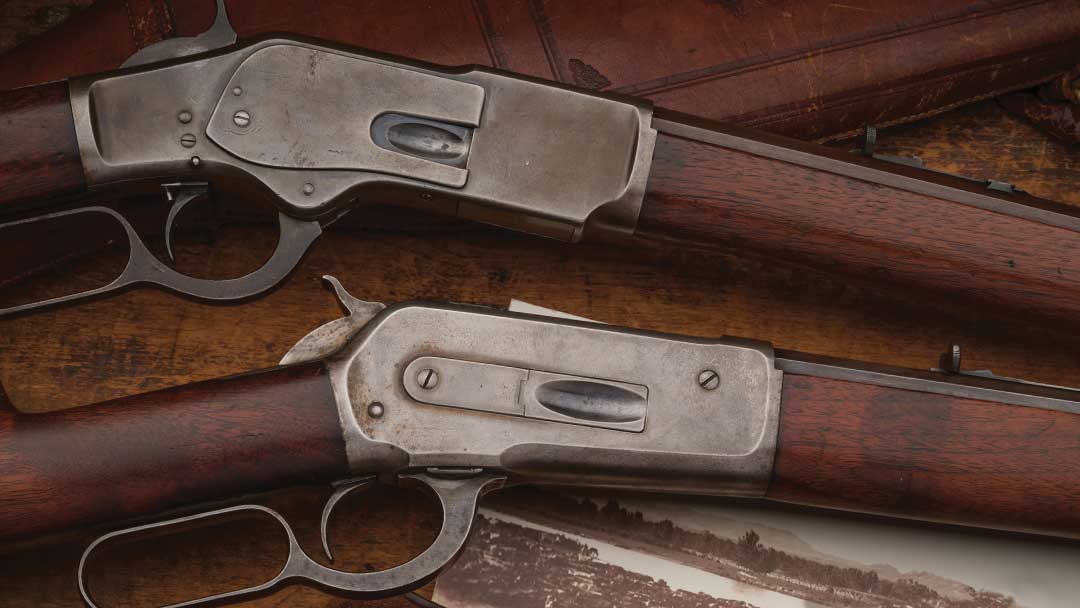
The Philadelphia Centennial International Exhibition of 1876 offered Winchester the perfect stage to introduce their latest arms and ammunition. The company would unveil their newest Winchester repeater at the event, the Model 1876, marketing the firearm as the “Centennial Rifle” or “Centennial pattern.”
With three models of Winchester repeater now in production and the Henry rifle still circulating, vendors used a variety of naming conventions to distinguish between the various lever guns. For instance, “Model of 1876”, “1876 Model,” and “Model 1876 of the Winchester pattern” were all common formats in period advertising.
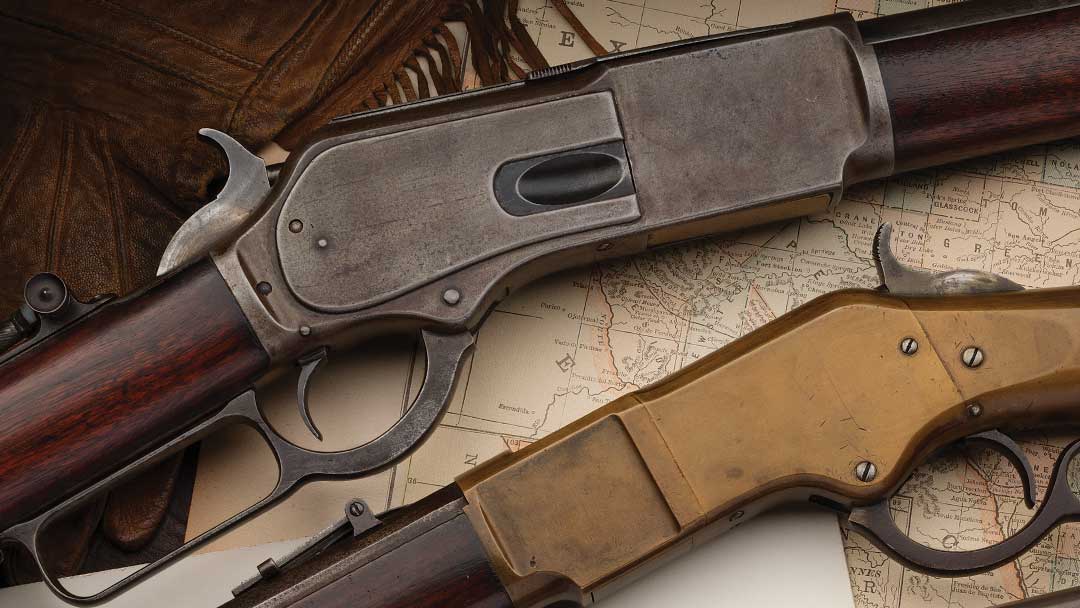
The Model 1876 Winchester repeater was a larger-framed, more powerful version of the Model 1873 initially designed to chamber the new .45-75 Winchester Centennial cartridge. With the expanding number of chamberings offered between the Model 1873 and Model 1876, caliber became another popular way for advertisers to designate between different rifles.
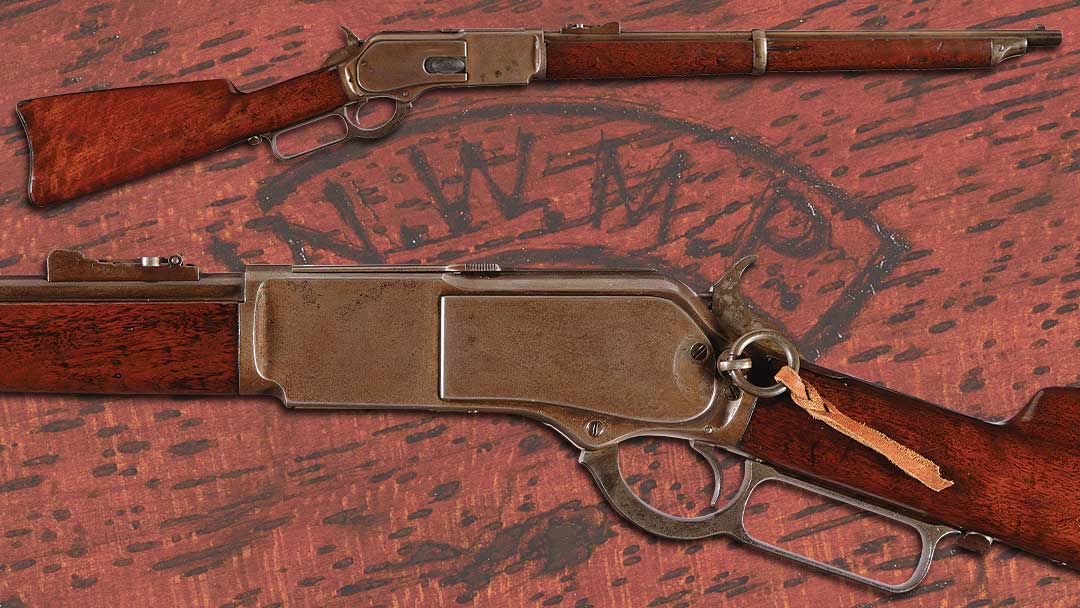
One of the most desirable and historic configurations of the Model 1876 was the Canadian North West Mounted Police saddle ring carbine chambered in .45-75 WCF. Eventually earning the name the “Winchester Mountie carbine,” 1,611 of these lever guns were purchased by the NWMP between 1878 and 1885.
The Model 1886 Winchester Repeater
Referring to new Winchester repeater models by date became even more common with the introduction of the 1886. Designed from a John Browning patent, “The New Winchester Model of 1886” was capable of chambering large big game cartridges like the .45-70 Govt, a market niche that had eluded Winchester up to this point.
The Model 1886 was soon offered in other calibers like .45-90 WCF and .40-82 WCF, as well as the mammoth .50-100 Express, the most powerful factory black powder lever action cartridge ever produced. 1886 models chambered in express cartridges were sometimes advertised as “Winchester Express Rifles” in marketing material.
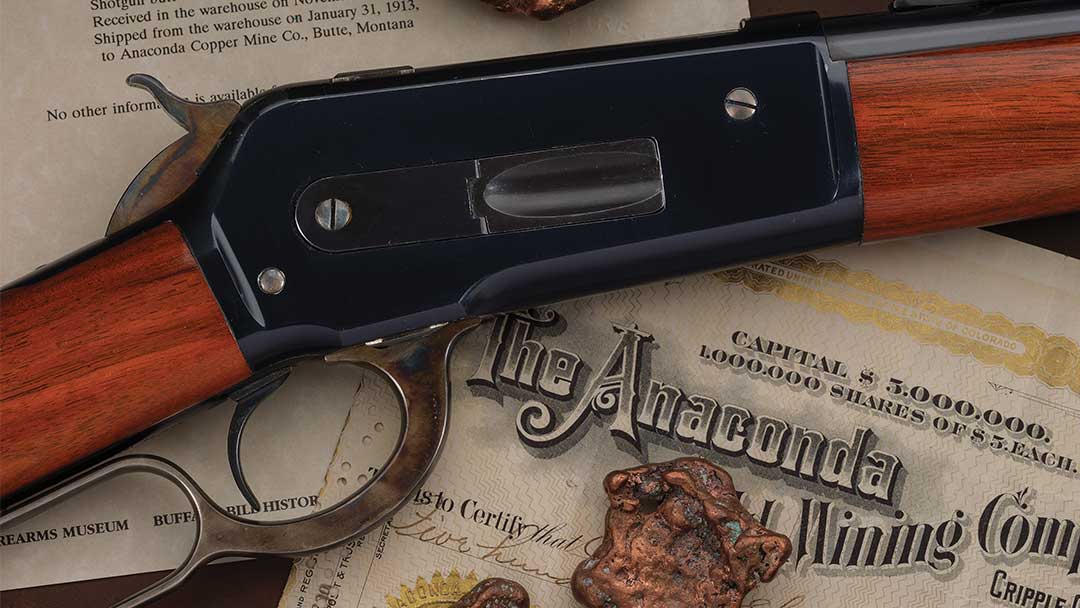
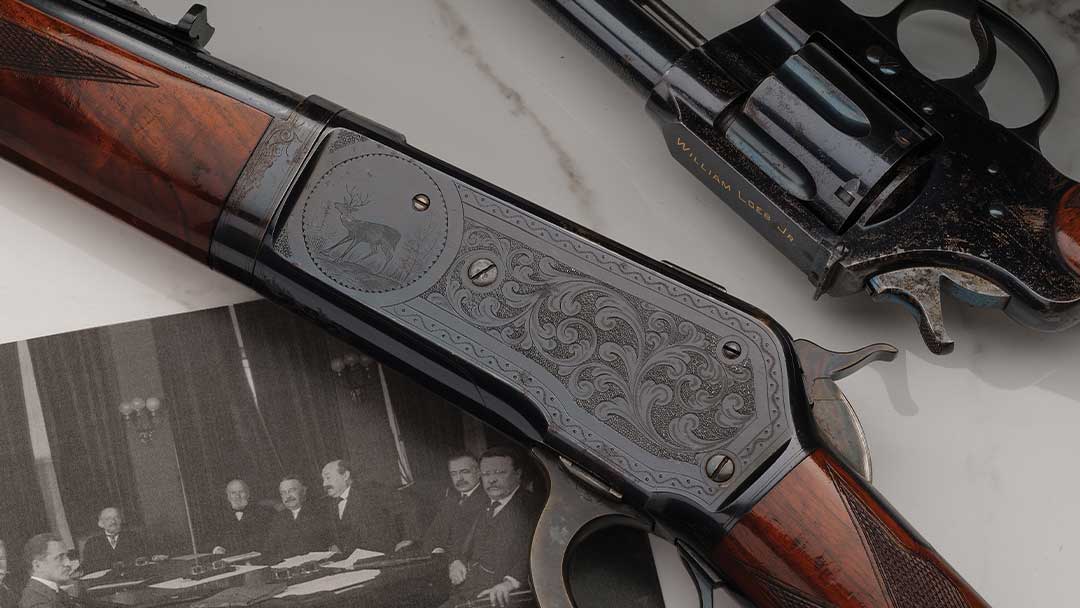
Due to the lever gun’s hefty chamberings, the Model 1886 Winchester repeater was sometimes referred to as Winchester’s “Bear Gun” or “Buffalo Gun” in news reports of the era. While the latter term was more widely associated with powerful single shot rifles like the Sharps, Winchester 1885, Springfield Trapdoor, and Remington Rolling Block, the Model 1886 became a widely appreciated bear gun, including with famed Winchester lover and future president Theodore Roosevelt.
Teddy Roosevelt’s Winchester 1886, serial number 9205, became the future president’s primary sporting rifle from 1887 until 1894. Roosevelt gifted the model to numerous friends and hunting companions, typically deluxe models in the takedown configuration.
The Model 1892 Winchester Repeater
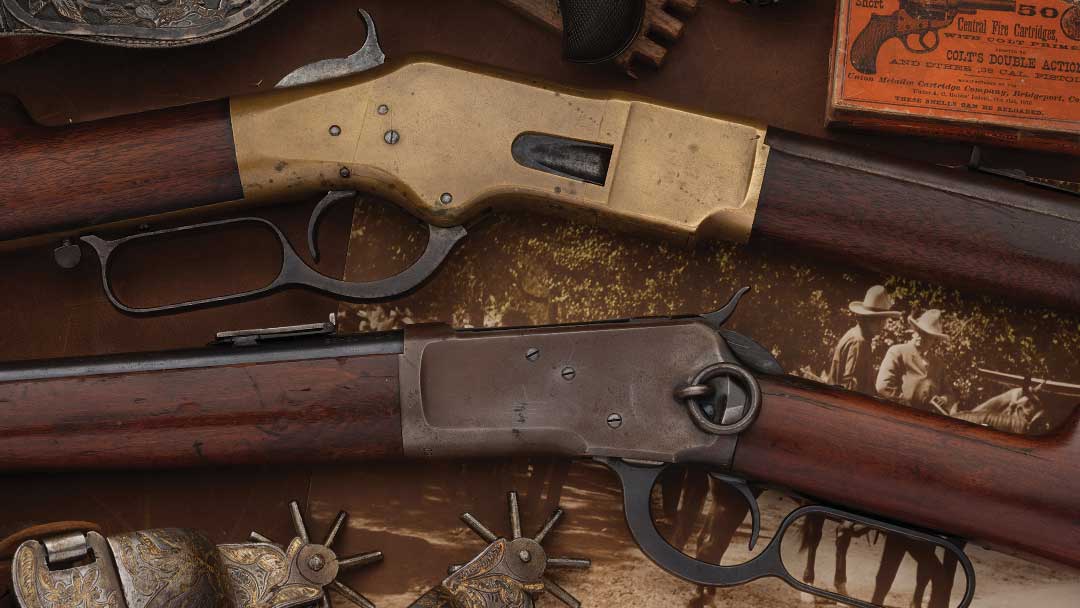
The next Winchester repeater was the Model 1892, a scaled-down version of Browning’s Model 1886 design. Introduced as a lighter and sturdier alternative to the aging Model 1873, the Model 1892 chambered short pistol rounds. This allowed cowboys, ranchers, homesteaders, and anyone else in the market for a reliable working gun to carry the same type of ammunition for revolver and carbine alike.
Winchester occasionally used the term “Cowboy Gun” in marketing material for the Model 1892, a nickname that resonated with the two million settlers who moved out West in the 1890s, promoted by the free federal land promised by the Homestead Act. In later decades, some gun stores would come to refer to the model as the “Winchester Cowboy Rifle,” particularly after the Western genre became popularized in literature, radio, and film.
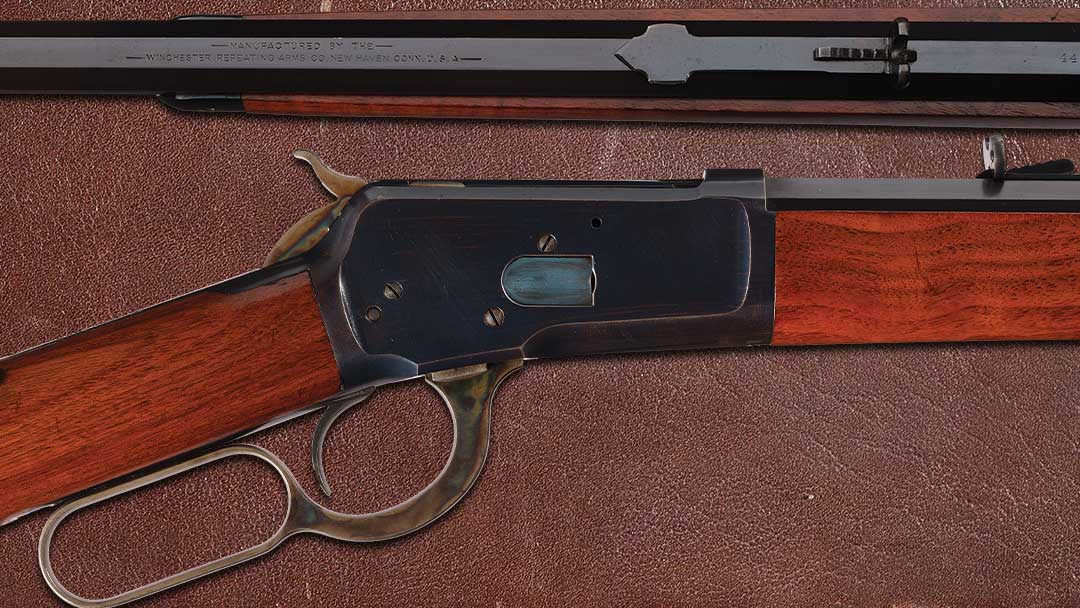
The Model 1892 Winchester repeater gained numerous nicknames overseas. Perry Brothers Limited of Brisbane, Australia imported the Winchester Model 1892 carbine from the 1890s to about 1920, marked the guns with “The Stinger” and an image of a wasp on the barrel. Lassetter and Co. of Sydney and Melbourne also sold the Model 1892 in Australia under the name of “The New Daisy Rifle.” The company had previously offered the Model 1873 as the “Daisy Rifle.”
1,004,675 Model 1892 lever guns were made by Winchester by 1945, and an even greater number of clones were produced in Spain by Garate Anitua under the “El Tigre” branding between 1915 and 1935. These Spanish “Tiger” carbines were chambered in .44-40 and manufactured with 22 inch round barrels. They were widely used by hunters, prison guards, railroad security, law enforcement, and citizen militias, and many were shipped to South America to satisfy a growing market.
The Model 1894 Winchester Repeater
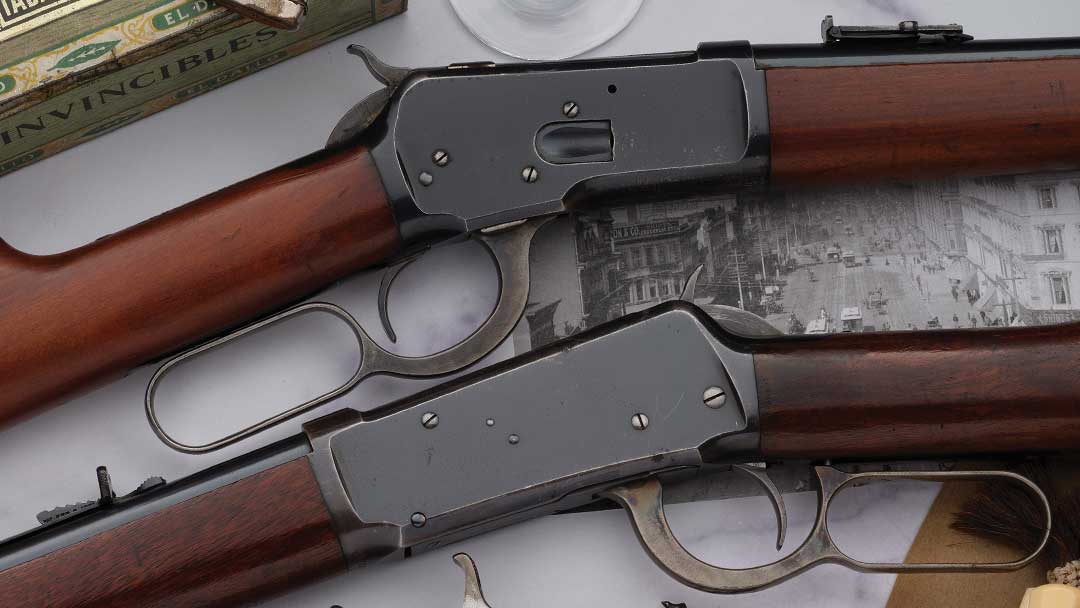
The next Winchester repeater, the Model 1894, gained fame a year after its release when it was adapted for Winchester’s new .30-30 smokeless cartridge. The rifle and the round became largely synonymous for a time, with early 20th century advertisements often referring to the iconic lever gun as simply the “30-30 Rifle,” “Winchester 30-30,” “30 caliber Winchester,” and the like.
The Model 1894 was also frequently marketed by gun dealers as “The Saddle Gun” or “Brush Gun.” Each name had been used for previous Winchester carbine models, but the branding was particularly fitting for the Winchester 1894’s portability and rugged design.
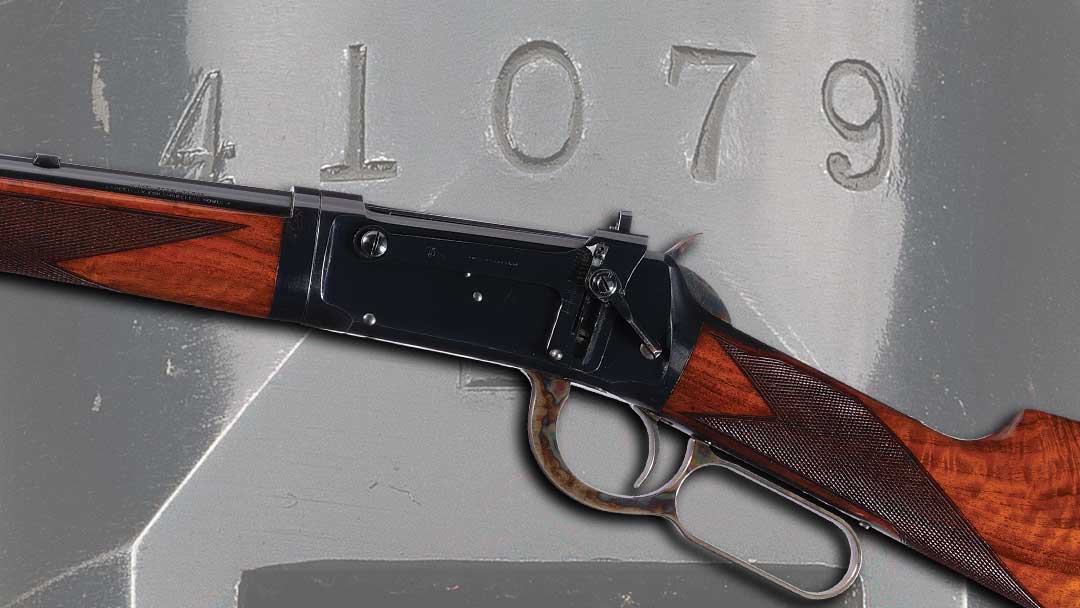
In the early 1900s, local advertisements dubbed the Model 1894 the “Winchester Deer Rifle” and less frequently the “Winchester Deer Gun.” By the 1920s, both names had become commonplace. “The gun for deer” would eventually become an official advertisement for the company, helping further popularize the firearm as a hunting standard.
With more than 7.5 million of these classic lever guns produced since its introduction 130 years ago, the Model 1894 not only ranks as the most popular Winchester repeater ever manufactured, but one of the most produced guns of all time.
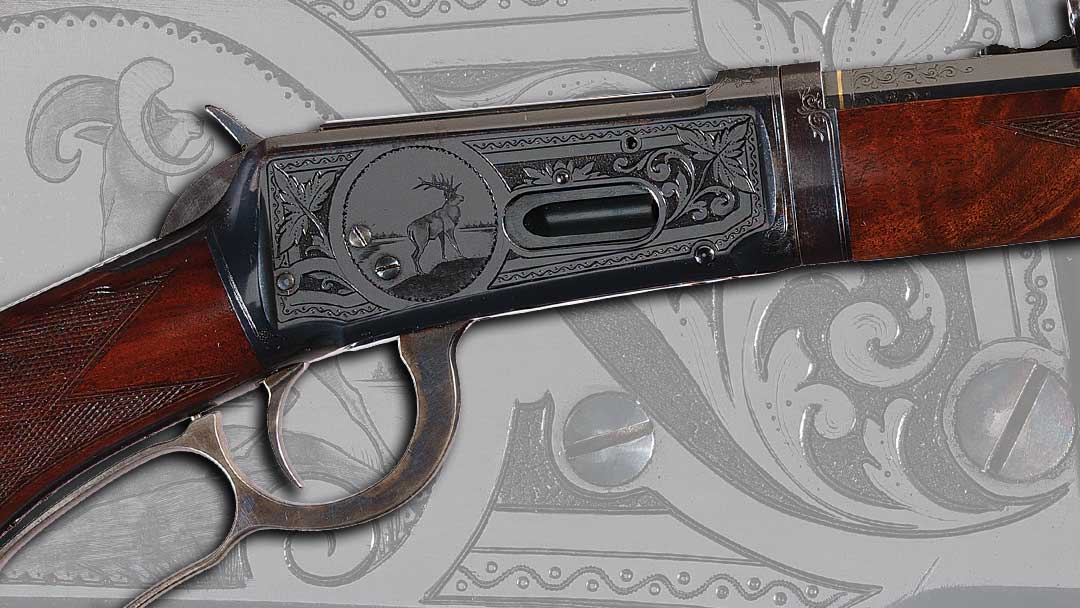
The Model 1895 Winchester Repeater
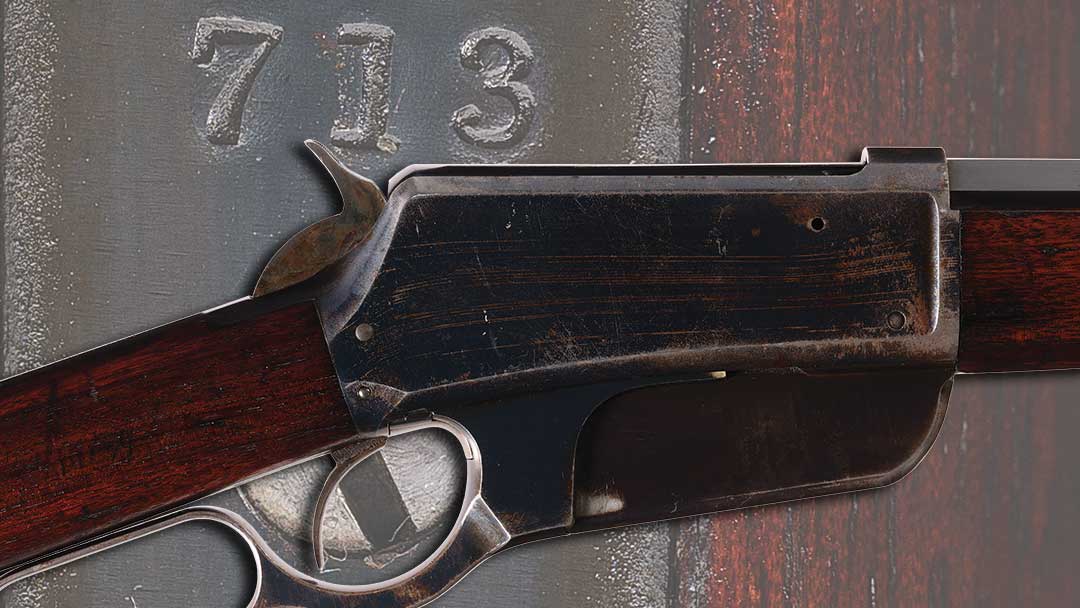
The “Model 1895, box magazine” was the black sheep of the classic Winchester repeater family. Opting for a fixed single-column box magazine over a traditional tube magazine allowed the new lever gun to chamber the pointed Spitzer bullets that had gained favor in the European market for their greater range and accuracy. The model was often labeled the “Box Magazine Winchester” by local gun dealers.
During the Spanish-American War, then-Colonel Theodore Roosevelt carried a Winchester 1895 in .30 Army while leading the Rough Riders in Cuba, then sported a Model 1895 chambered in .405 Winchester during his famous African safari and many subsequent North American hunts, dubbing the latter rifle “Big Medicine.”
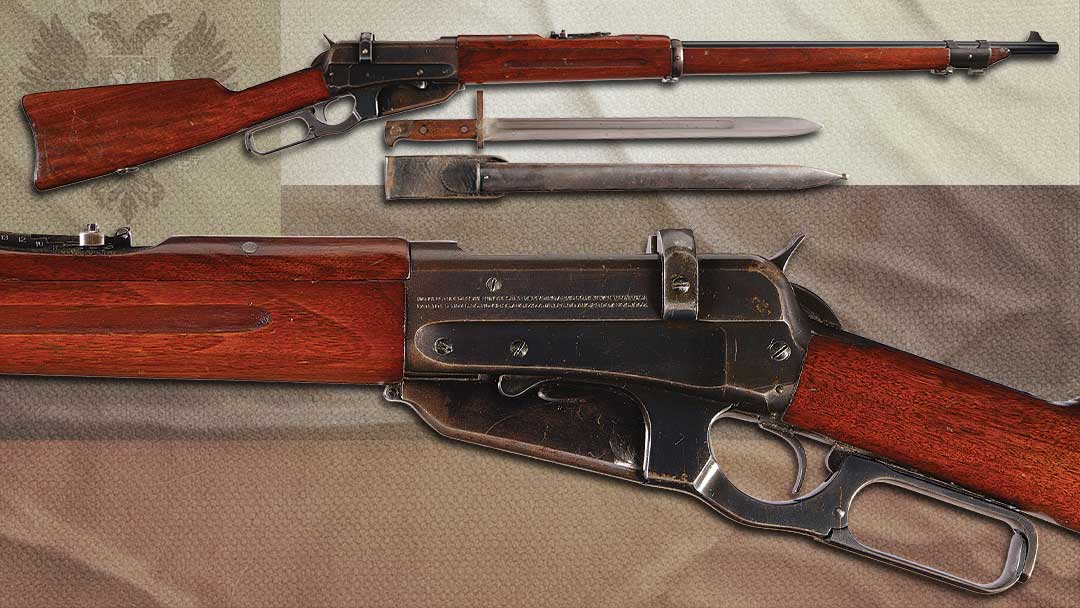
When WW1 broke out, the Russian Empire had a severe shortage of modern rifles in its arsenal. The nation turned to overseas manufacturers, including contracting Winchester for 300,000 rifles based on the Model 1895. Known as the “Russian musket,” modifications included an extended barrel and forend, a 7.62x54R chambering, and a stripper clip guide mounted on the receiver for fast reloading. Winchester would deliver 294,000 Russian muskets, accounting for 70 percent of total sales for the Model 1895 Winchester repeater.
The Finest Winchester Repeater Selection
Though many of the models featured here have been reintroduced over the years, classic examples of the 19th century Winchester have become some of the most valuable arms in the collecting pursuit. Whether you’re in the market for a vintage piece that can be carefully fired and fielded or a high-end antique from the Golden Age of the Old West lever gun, Rock Island Auction offers some of the finest examples of the Winchester repeater for sale.
Subscribe to the weekly Rock Island Auction newsletter to receive new gun blogs and gun videos on the rarest and more collectible 19th century lever action rifles. We cover everything from the Jennings lever action, the Spencer repeater, the Colt Burgess, the Evans rifle, the Marlin Model 1881, the Marlin Model 39, the Savage 99, and more.