Among Colt Single Army Action revolvers, certain variations stand clear as collecting classics whether through design, history or both.
The epic tale of the Single Action Army from its introduction in 1873 through three generations of production make it one of the most important firearms ever made. In an event that draws from seven amazing collections amassed through 250 years of collecting experience, Rock Island Auction will offer some of the finest and rarest Colt Single Action Army revolvers for sale in its Dec. 6-8 Premier Auction in Bedford, Texas. Here are some of the best.
Single Action Army: Pinched Frame
The name of this collecting rarity is a bit deceiving in that the frame isn’t pinched, but rather the pinched sighting groove found on extremely early production of the Single Action Army. The rear sight is located forward of the standard frame position at the extreme rear of the top strap. While it was discontinued on the Single Action Army, the pinched frame remained a feature on the Cloverleaf and House revolvers being produced at the same time.
The pinched frame is only known on the civilian SAAs with serial numbers below 200 manufactured before mid-July 1873. How many have survived is unknown. J.R. Edie, Captain of Ordnance at Springfield Arsenal wrote to his boss in Washington, D.C., on July 22, 1873, “The change in the sight is slight but is quite an improvement.” The full grooved top strap became standard on the Army contract of July 23, 1873.
Single Action Army: Cavalry Model
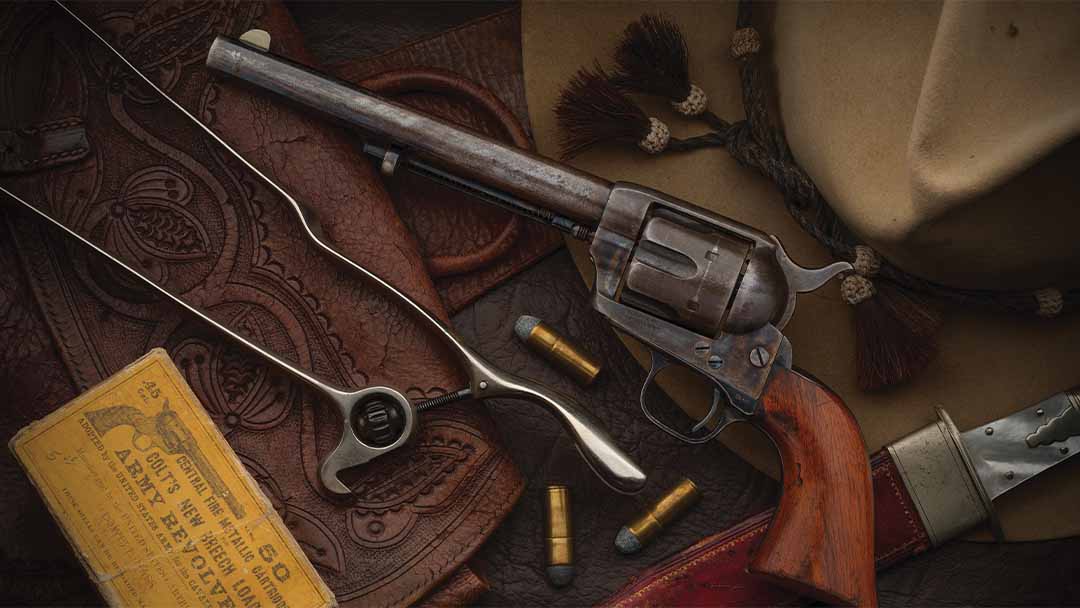
The Cavalry Models of the Colt Single Action Army are martially-approved revolvers with 7 1/2-inch barrels chambered in .45 Colt manufactured between 1873 and 1892. There were 12,500 made under contracts with the United States government. The lowest known serial number for a Cavalry Model is 179. Rock Island Auction sold the SAA with the third lowest known serial number, no. 189, in May 2021.
The Cavalry Model is ripe with sub-genres of Single Action Army collection, whether they are marked by the various sub-inspectors, like Orville W. Ainsworth who inspected the earliest Cavalry Colts or those that followed like Henry Nettleton, David F. Clark or Rinaldo Carr, or where and when they were issued, like Lot 5 revolvers of the ill-fated 7th Cavalry led by George Armstrong Custer at the Little Bighorn.
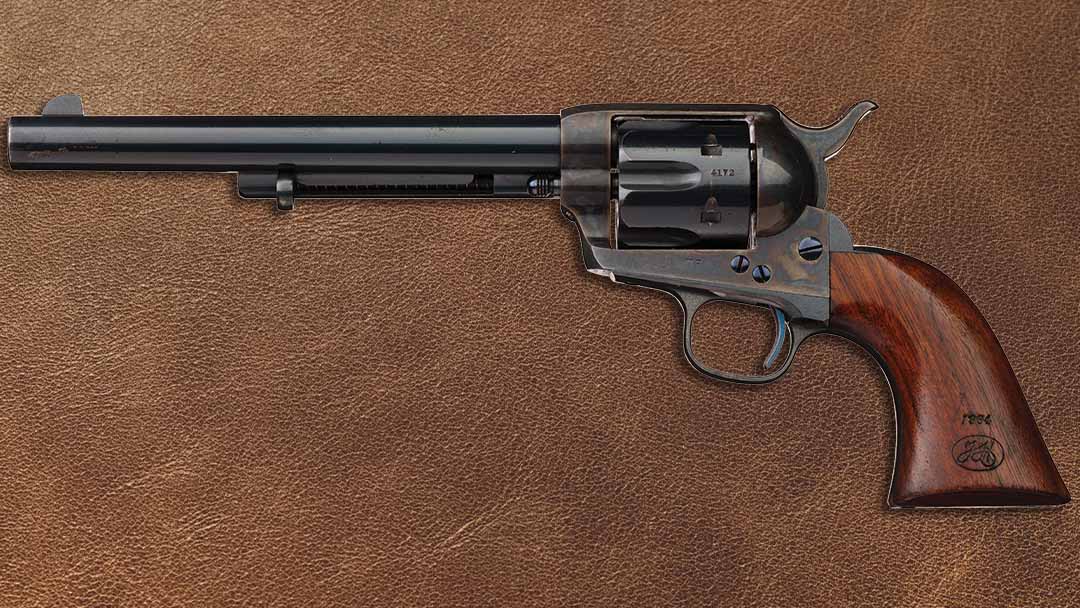
Nickel-plated Cavalry Models are another sub-genre to explore. Sub-inspected revolvers left the factory with the “government blue” finish, yet there are numerous examples and a handful of theories as to how they received their nickel plating, ranging from being issued to Native American scouts, special orders for officers, surplus revolvers bought back by Colt and being issued to the U.S. Navy.
Martially condemned parts that made it to the civilian market and guns that were part of an overrun are also areas of collecting Cavalry Model areas worth investigating. As the authors of “A Study of the Colt Single Action Army Revolver” wrote, “The reader should be reminded that in nearly every instance where a revolver is encountered with strange characteristics, these characteristics in turn will “tell a story” and much knowledge may be learned by careful examination and reconstruction of the events which lead to certain Ordnance marks which were, or were not applied to any specific Colt Single Action revolver.”
Colt Single Action Army: Rimfire Chamberings
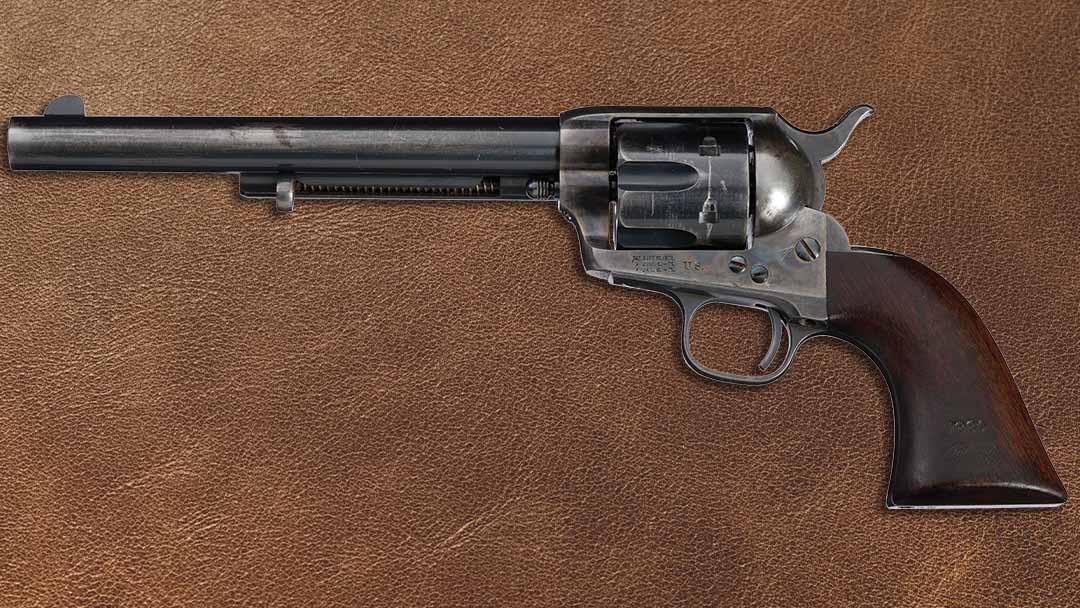
Colt Single Action revolvers chambered for rimfire cartridges are extremely rare, either in .22, .32 and .44 calibers, with .22 being most common. In 1888, Colt had about 100 unsold .44 rimfire SAAs with standard frames and were converted to plinkers by replacing them with .22 caliber barrels and cylinders. Despite already being stamped .44 cal on the trigger guard, 107 revolvers were overstamped for .22 caliber. The company made 93 .22 rimfire target pistols with flattop frames.
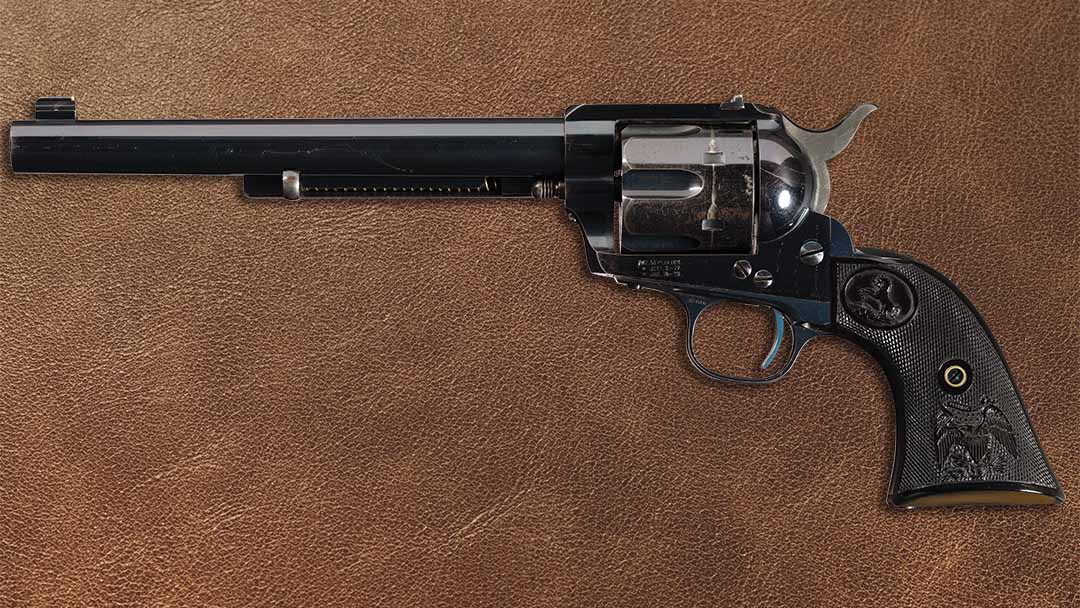
Rarer than the .22 Rimfire SAAs are the .32 Rimfire, of which only two were made. One is a standard frame, while the second, with a flattop frame, was a special order. Colt made 1,863 of the Single Action Army in .44 rimfire, not including a pilot model. Of the pistols made for .44 Rimfire, 107 were converted to the .22 Rimfire.
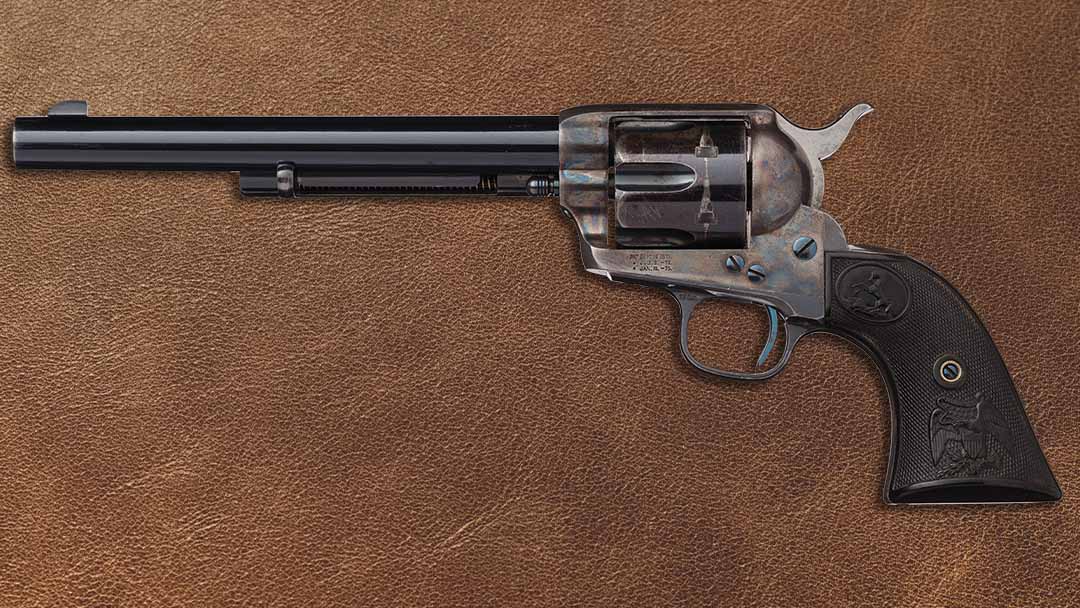
Single Action Army: Target Models
Target pistol shooting came into popularity in the late 1880s, especially in England after the National Rifle Association opened up the Wimbledon Commons and the shooting matches held there for pistol shooters. Shooting quickly became the British national pastime.
In 1890, marksmen would claim most of the prizes in England and across Europe. That year also marked the opening of the new shooting range at Bisley. Colt won 14 of 16 prizes in the first series of matches and Walter Winans, an internationally recognized shooter, won the first year at Bisley firing a Colt 1878, but double action revolvers weren’t the best for accuracy and target shooting because its trigger couldn’t be adjusted.
Colt advertised its Single Action Army for target shooting in a number of chamberings including .32 Colt, .32 S&W, .23-44, .38-44, .44 Russian and .44 Special. The company introduced its flattop frame for mounting adjustable rear sights in 1888 and ultimately offered it in 22 different calibers including British calibers.
Of the flattop frame, a Colt advertisement stated “the frame has a flat top instead of the half-round top through which is a lateral sliding bar rear wind-gauge sight which is capable of fine adjustment. The front sight is arranged by a base attached to the barrel into which are fitted fine pin-head sights. Several sights of different heights are provided which enable the marksmen to use various loads from the light gallery charge up to the full charge.”
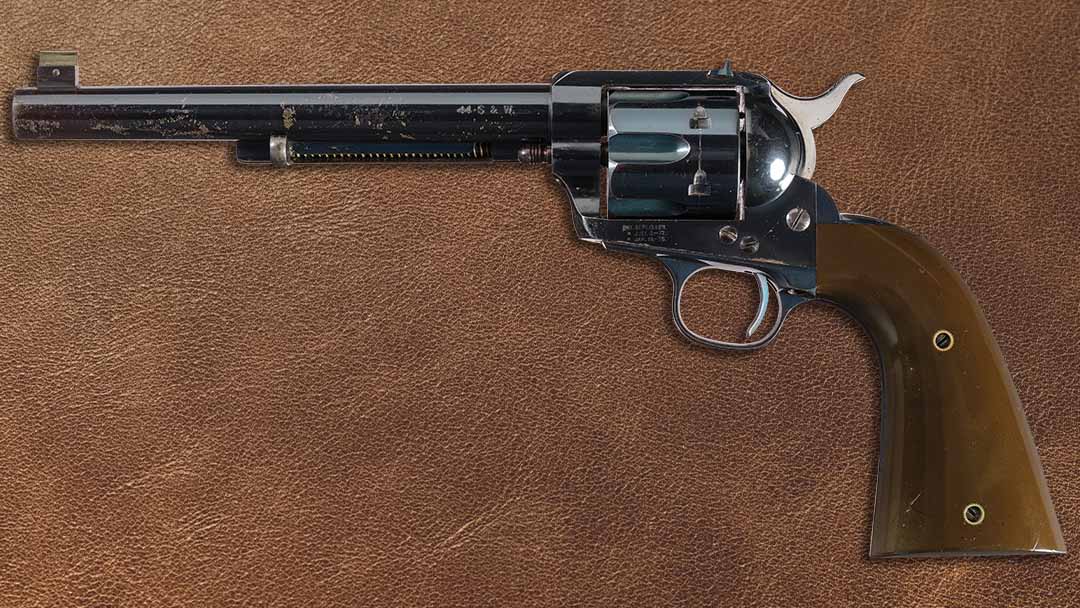
A report from 1890 about Colt’s target shooting success read, “It will be noticed that the Colt revolvers are leading all others. This is a dismal year for the Webleys. Not only has the Colt won all prizes in the Officer’s revolver matches at Bisley, but it also carried off all but the smallest prize at Dublin, and at Edinburgh Midlothian Rifle Association revolver competitions took all, without exception. It is now, by all fair-minded men over here, conceded to be ahead of any English revolver.”
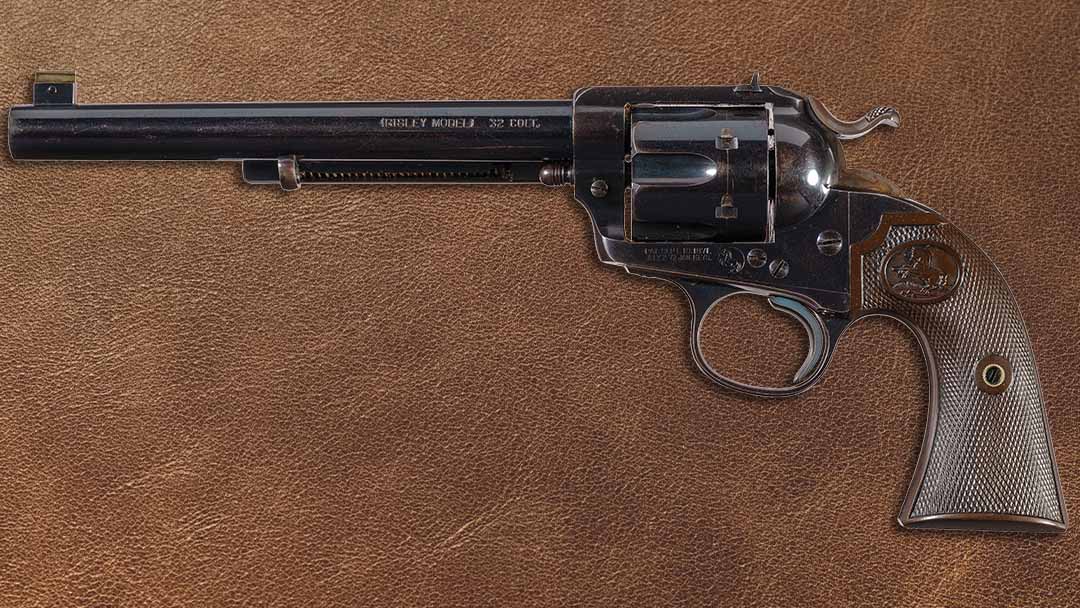
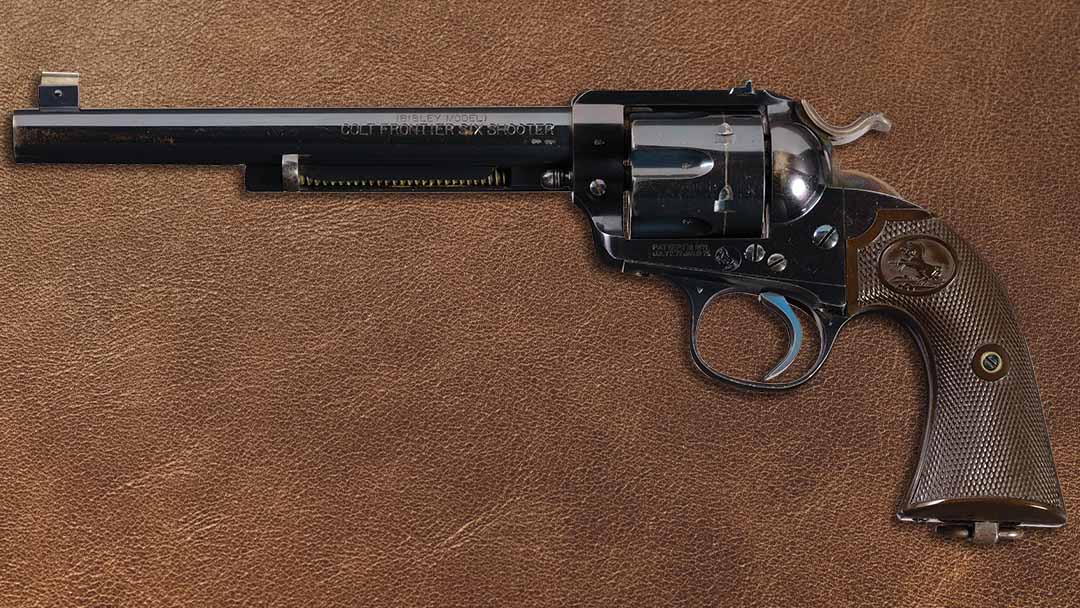
Colt named a specially made target SAA revolver its Bisley model after the British competition shooting range when it went on the market in 1896. The grips were larger with a sharper drop so the hand could sit deeper in the hand so the gun doesn’t rock back under recoil. The trigger was set back and more curved as well as widened. The hammer was lower and flatter and the revolver came offered in English calibers like the .455 Eley and .455 Enfield. Production of the Bisley model ended in 1912.
Single Action Army: Sheriff Model
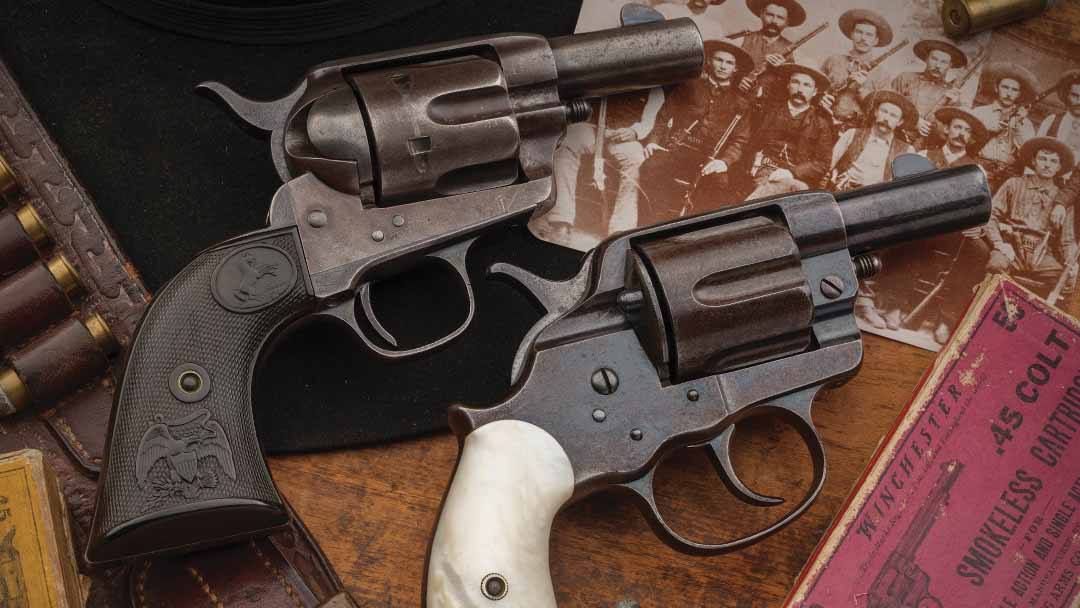
The first Sheriff Model, or “storekeeper’s model,” shipped in 1882, recognizable by not having an ejector rod assembly and generally, a 4-inch or shorter barrel. Fifty-one percent of the Sheriff Models shipped had 4-inch barrels while one-third shipped with 3 1/2-inch barrels. The vast majority of the Sheriff Model were chambered in .45 Colt or .44-40 WCF though later calibers were added. The guns were easily concealable and frequently served as a secondary arm for law enforcement, earning their nickname.
Colt advertised the ejectorless Single Action Army for sale with short barrels for 10 years, from 1888 to 1898, though a survey by Kopec, Graham and Moore recording Sheriff Model revolvers spans 45 years, from 1882 to 1927. About 1,000 to 1,200 were estimated to have been manufactured, but at least one survey puts the number produced at fewer than 600.
Improvements to ammunition, from black powder to smokeless and better primers, made smaller calibers like the .38 and .32 caliber more capable with smaller double action revolvers, and then in the early 20th century small semi-automatic pistols were the final nail in the Sheriff Model’s coffin. After 1909, production was one order, one revolver until 1927.
The revolver below was owned by Texas Ranger Benjamin F. Finn who joined when he was 15 in 1879, serving in Capt. George W. Baylor’s A Company of the Frontier Battalion until he was discharged in February 1882. He won the gun after Baylor took it off a desperado, according to a notarized statement by Finn’s widow.
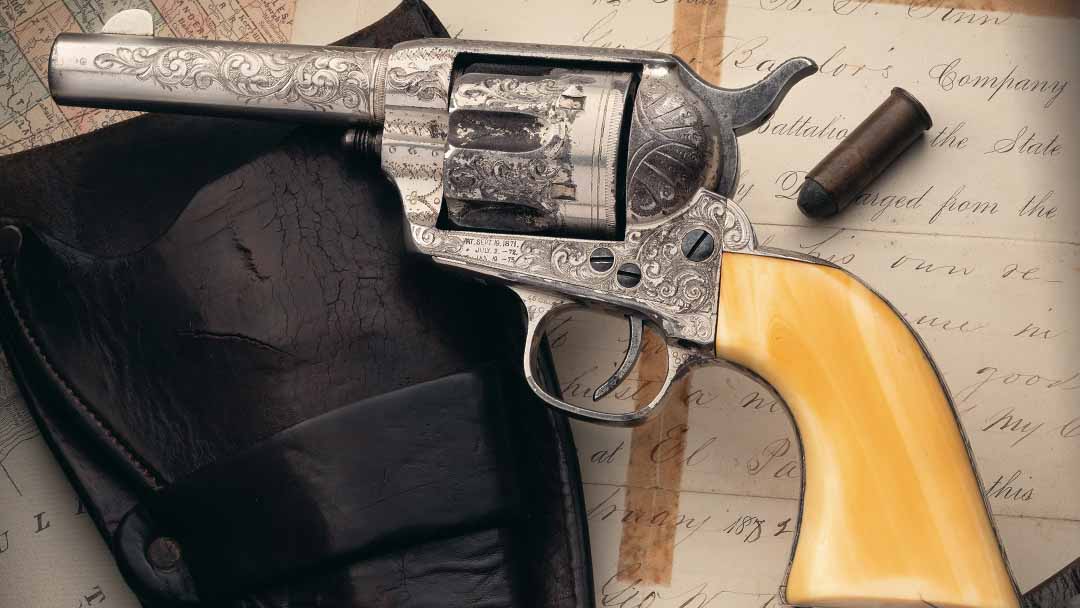
Some Sheriff Models had “fluted frames” that is an early production feature of the ejectorless revolvers. The fluted areas on either side near the cylinder pin were for the clearance of the ejection rod, unnecessary on ejectorless revolvers.
Single Action Army for Sale
Perhaps the most easily recognizable and iconic firearm in history, the Colt Single Action Army revolver offers so many variations for collectors to explore. Whether it is a Cavalry or Sheriff Model, a rimfire chambering, or a target pistol with a flattop frame or Bisley features, these are guns that are rarities within the Single Action Army family and they are available in Rock Island Auction Company’s Dec. 6-8 Premier Auction.
Sources:
“A Study of the Colt Single Action Army Revolver,” by Ron Graham, John A. Kopec and C. Kenneth Moore
“The 36 Calibers of the Colt Single Action Army,” by David M. Brown